The Operating Logic and Principles of VFD Power Distribution Cabinets
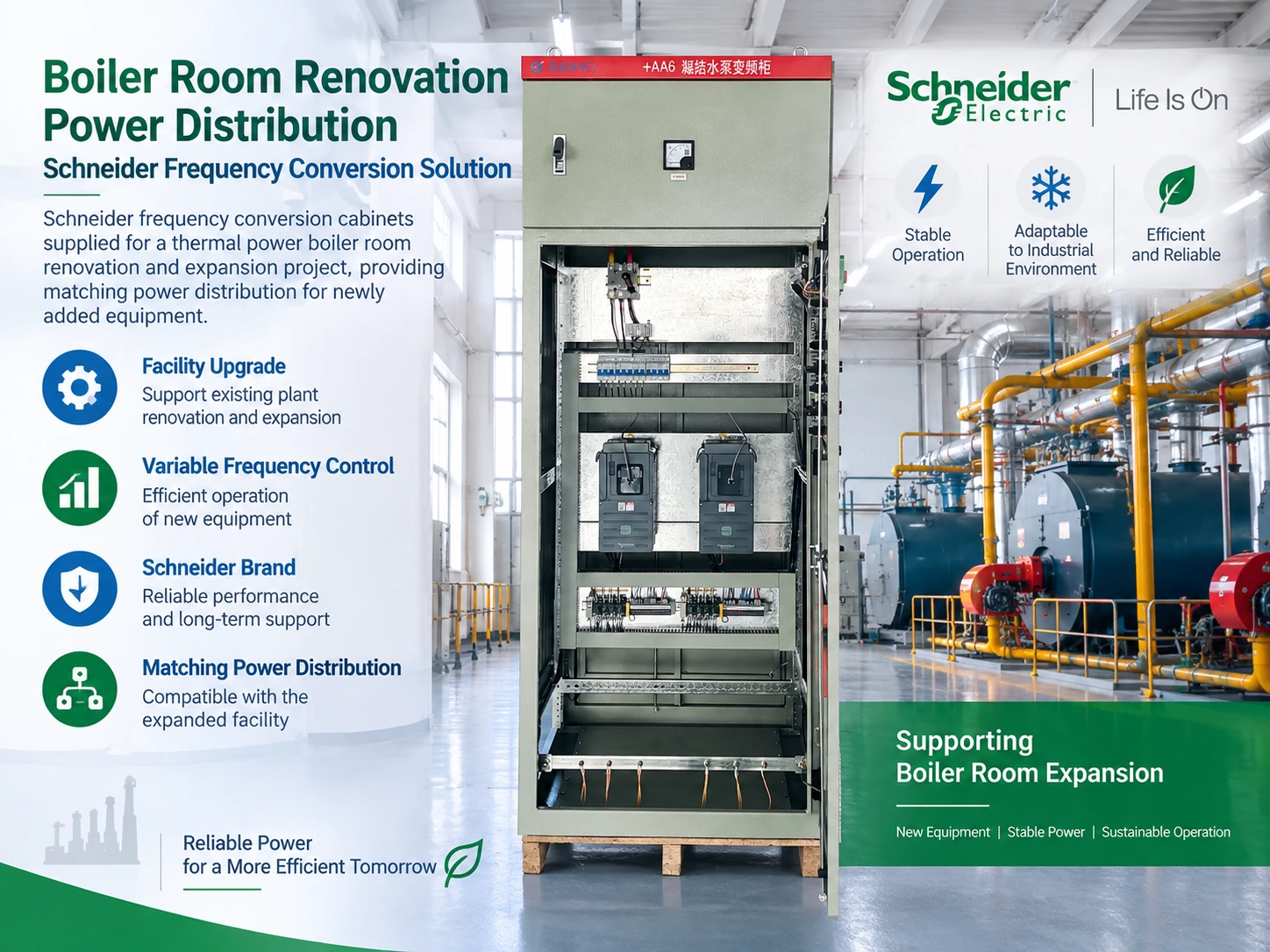
In modern industrial automation systems, VFD Power Distribution Cabinets (Variable Frequency Drive Power Distribution Cabinets) are an essential component used to control the speed of motors in a wide range of applications, from pumps and fans to conveyors and compressors. These cabinets provide significant energy savings and enhanced motor protection, contributing to both operational efficiency and system longevity.
This article delves into the operating logic of VFD Power Distribution Cabinets, exploring the principles behind their design, functionality, and key features. We will start by examining the fundamental operating principles, followed by a breakdown of the internal components and how they work together to provide efficient motor control.
- 1. Introduction to VFD Power Distribution Cabinets
What is a VFD Power Distribution Cabinet?
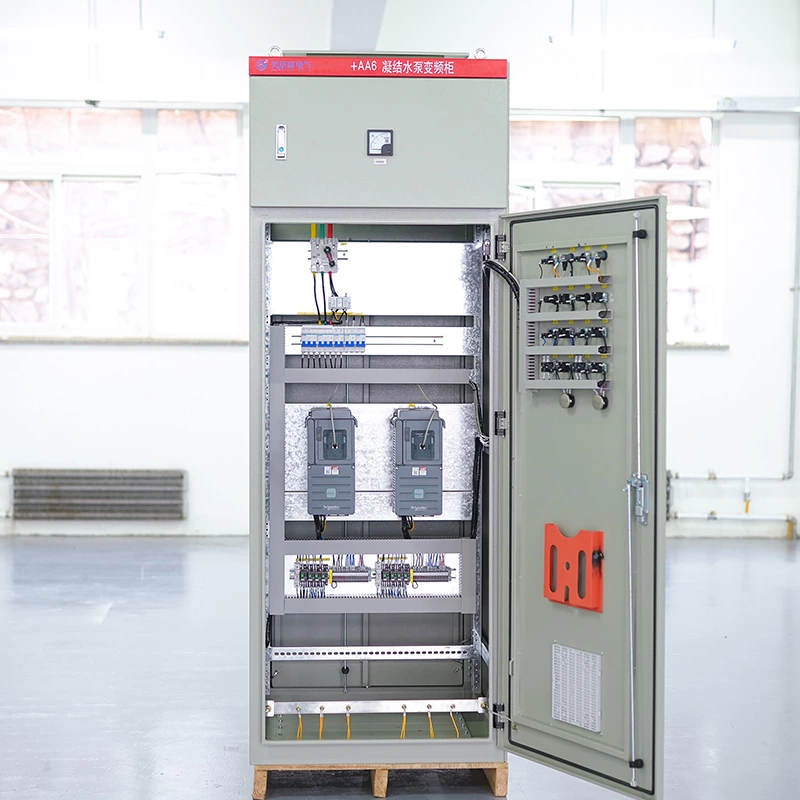
A VFD Power Distribution Cabinet is an electrical device used to control the speed and torque of electric motors. It works by varying the frequency of the electrical supply to the motor, which in turn controls the motor’s speed. These cabinets are commonly used in applications where precise control over motor performance is required, such as in pumps, fans, HVAC systems, and conveyors.
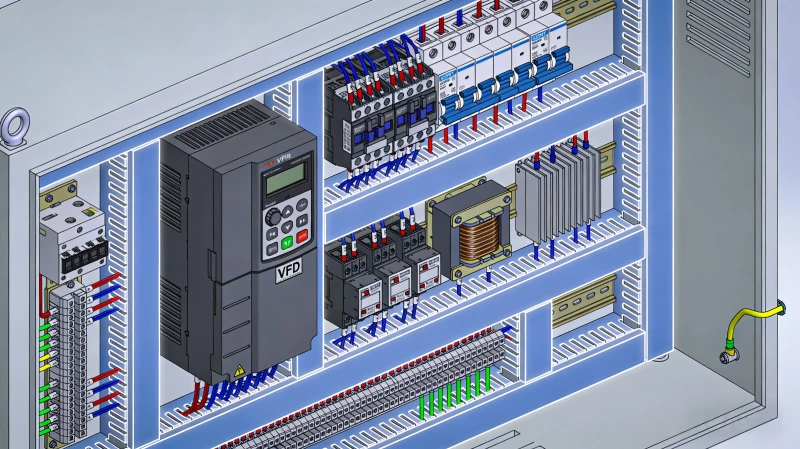
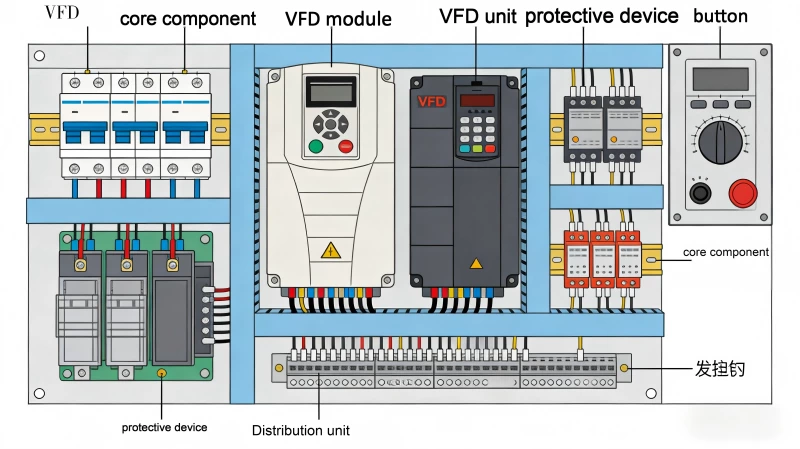
VFD Power Distribution Cabinets are typically made up of several key components:
- Variable Frequency Drive (VFD): The core component responsible for changing the frequency of the electrical supply.
- Power Distribution Unit: Manages the distribution of electrical power to various parts of the system.
- Protection Mechanisms: Includes fuses, circuit breakers, and overcurrent protection.
- Control Interface: Allows operators to set parameters such as speed, acceleration, and deceleration.
- These components work together to offer precise motor control while ensuring the safety and efficiency of the system.
The Operating Logic and Principles of VFD Power Distribution Cabinets
In modern industrial automation systems, VFD Power Distribution Cabinets (Variable Frequency Drive Power Distribution Cabinets) are an essential component used to control the speed of motors in a wide range of applications, from pumps and fans to conveyors and compressors. These cabinets provide significant energy savings and enhanced motor protection, contributing to both operational efficiency and system longevity.
This article delves into the operating logic of VFD Power Distribution Cabinets, exploring the principles behind their design, functionality, and key features. We will start by examining the fundamental operating principles, followed by a breakdown of the internal components and how they work together to provide efficient motor control.
- 1. Introduction to VFD Power Distribution Cabinets
What is a VFD Power Distribution Cabinet?
A VFD Power Distribution Cabinet is an electrical device used to control the speed and torque of electric motors. It works by varying the frequency of the electrical supply to the motor, which in turn controls the motor’s speed. These cabinets are commonly used in applications where precise control over motor performance is required, such as in pumps, fans, HVAC systems, and conveyors.
VFD Power Distribution Cabinets are typically made up of several key components:
- Variable Frequency Drive (VFD): The core component responsible for changing the frequency of the electrical supply.
- Power Distribution Unit: Manages the distribution of electrical power to various parts of the system.
- Protection Mechanisms: Includes fuses, circuit breakers, and overcurrent protection.
- Control Interface: Allows operators to set parameters such as speed, acceleration, and deceleration.
These components work together to offer precise motor control while ensuring the safety and efficiency of the system.
2. The Operating Principle of VFD Power Distribution Cabinets
- The Basic Concept of VFD Operation
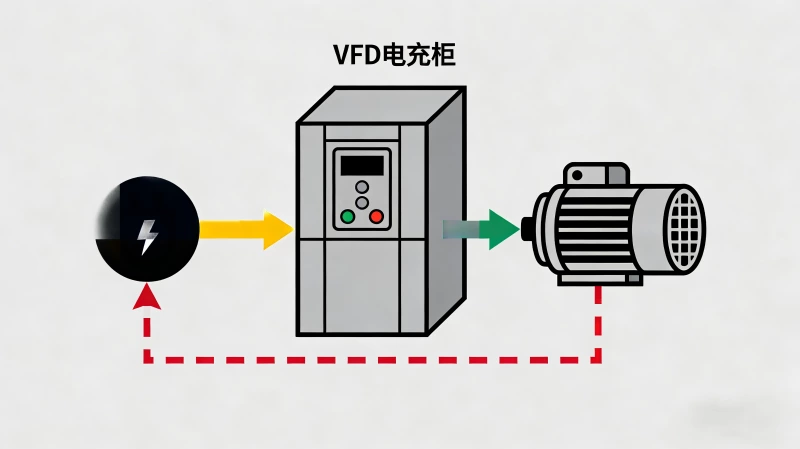
At the heart of the VFD Power Distribution Cabinet is the Variable Frequency Drive. The basic concept behind a VFD is quite simple: it alters the frequency of the power supplied to the motor. Since the speed of an induction motor is directly proportional to the frequency of the supply voltage, adjusting the frequency allows for precise control over motor speed.
In traditional fixed-speed motor systems, motors operate at a constant speed, regardless of the load. However, this leads to inefficient energy use, especially when the motor is not running at full capacity. By contrast, a VFD Power Distribution Cabinet adjusts the motor's operating speed in real-time to match the load demand, improving efficiency and reducing unnecessary energy consumption.
- The Key Phases of VFD Operation
A typical VFD Power Distribution Cabinet operates in three key phases:
- 1. Rectification (AC to DC Conversion)
- The first step in the VFD process is to convert the incoming alternating current (AC) into direct current (DC). This is done through a rectifier, which typically uses diodes to convert the AC input into a pulsating DC output.
During this phase, the input AC is smoothed into a DC voltage through capacitors, which serve to filter the DC ripple.
- 2. DC Link or DC Bus
- After rectification, the DC voltage is stored in the DC bus. This DC link is an essential part of the VFD’s operation, providing the energy needed for the next stage. The stored DC energy allows the VFD to precisely control motor speed by controlling the output frequency.
- 3. Inversion (DC to AC Conversion)
- The final step is the conversion of DC back into AC. This is done through an inverter stage, where the DC voltage is converted back into a controlled AC frequency that is supplied to the motor. By adjusting the frequency of the AC output, the VFD controls the speed of the motor.
- The output frequency is adjusted based on the desired motor speed. The higher the frequency, the faster the motor will run.
- The voltage provided to the motor is also varied to maintain the correct voltage-to-frequency ratio, ensuring that the motor operates efficiently.
3. Motor Control and Speed Regulation
Speed Control Through Frequency Variation
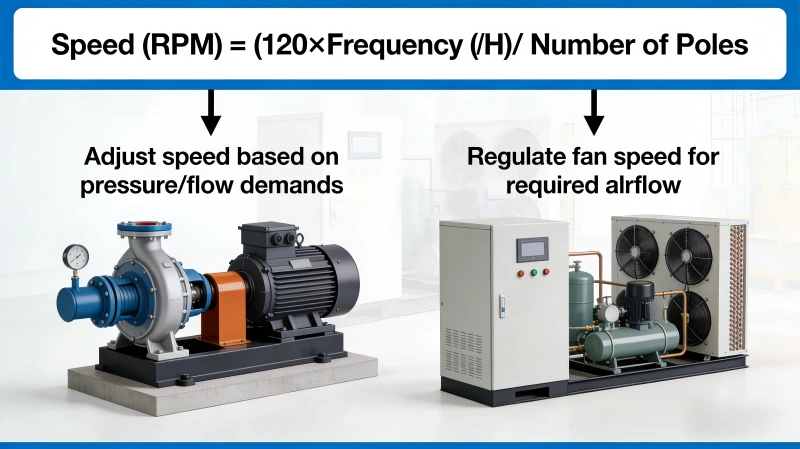
One of the most important functions of a VFD Power Distribution Cabinet is the ability to control motor speed by varying the output frequency. The speed of an induction motor is determined by the following formula:
Speed (RPM)=120×Frequency (Hz)Number of Poles\text{Speed (RPM)} = \frac{120 \times \text{Frequency (Hz)}}{\text{Number of Poles}}Speed (RPM)=Number of Poles120×Frequency (Hz)
By adjusting the frequency supplied to the motor, the VFD can increase or decrease the motor speed according to the application requirements.
For instance:
- In a pumping system, the VFD can adjust the motor speed based on the system's pressure or flow demands.
- In HVAC systems, it can regulate the fan speed to match the required airflow.
Torque Control
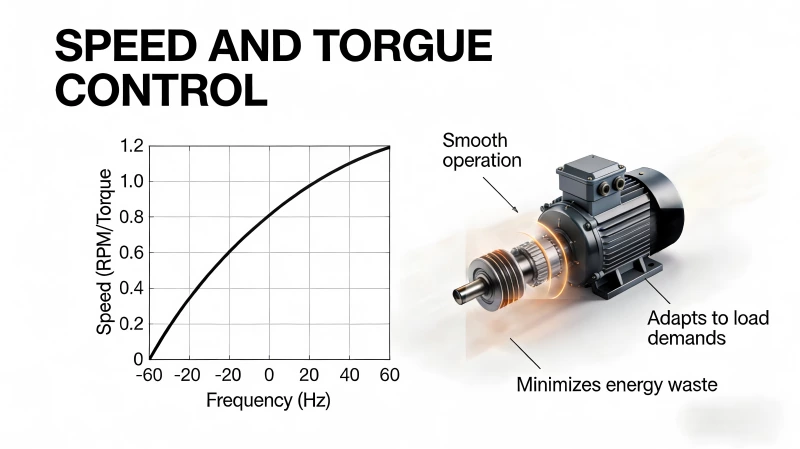
- In addition to speed control, VFD Power Distribution Cabinets also regulate the torque produced by the motor. Torque is the rotational force generated by the motor to drive the connected load. The VFD controls torque by adjusting the motor’s voltage and frequency simultaneously.
In a typical VFD system:
- The VFD ensures that torque is directly proportional to the motor’s speed, maintaining the appropriate voltage-to-frequency ratio.
- The VFD can adjust the motor’s acceleration and deceleration rates, preventing sudden torque changes that could damage equipment.
- This combination of speed and torque control enables the VFD to operate motors efficiently and smoothly, adapting to varying load demands while minimizing energy waste.
4. Protection Mechanisms in VFD Power Distribution Cabinets
Overcurrent Protection
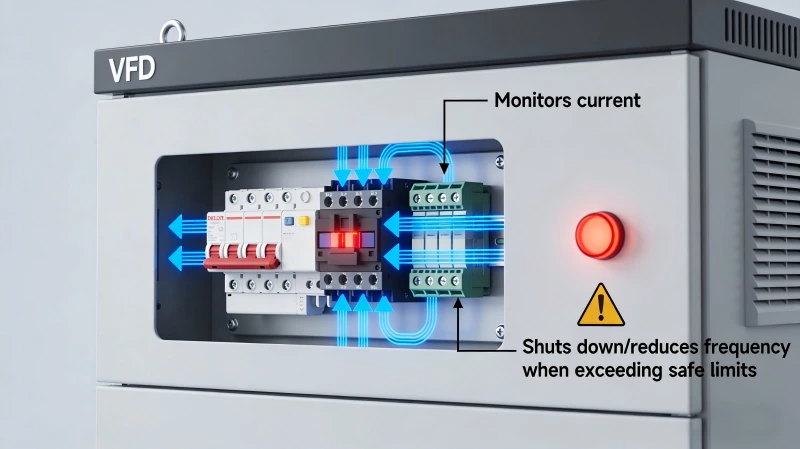
Overcurrent protection is a vital feature in any VFD Power Distribution Cabinet. It ensures that the motor and the VFD itself are not subjected to excessive current, which can lead to overheating or damage. If the current exceeds safe limits, the VFD will automatically shut down or reduce the output frequency to protect the system.
Overcurrent protection is achieved through circuit breakers and fuses in the power distribution unit of the VFD.
The VFD control system constantly monitors the current to ensure safe operation.
- Overvoltage and Undervoltage Protection
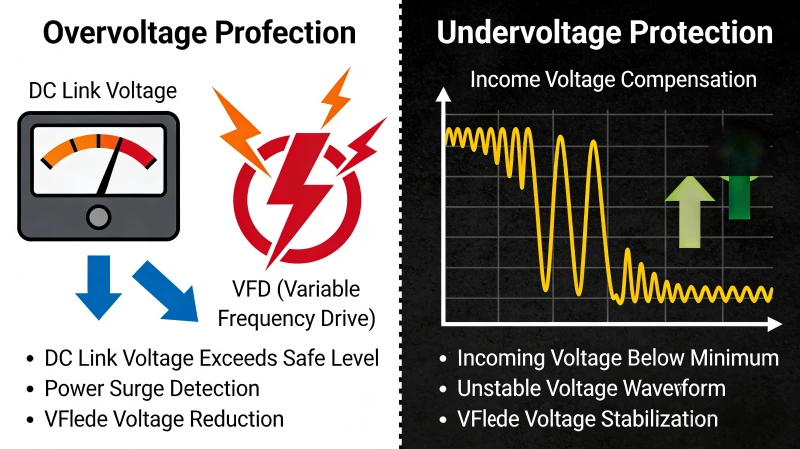
Another important protection feature of VFD Power Distribution Cabinets is overvoltage and undervoltage protection. If the incoming voltage exceeds or drops below safe levels, the VFD will adjust its operation to prevent damage to both the drive and the motor.
Overvoltage protection typically triggers when the DC link voltage exceeds safe levels, which can be caused by external factors like power surges.
Undervoltage protection ensures that the motor receives a minimum voltage for stable operation, preventing operation under unstable conditions.
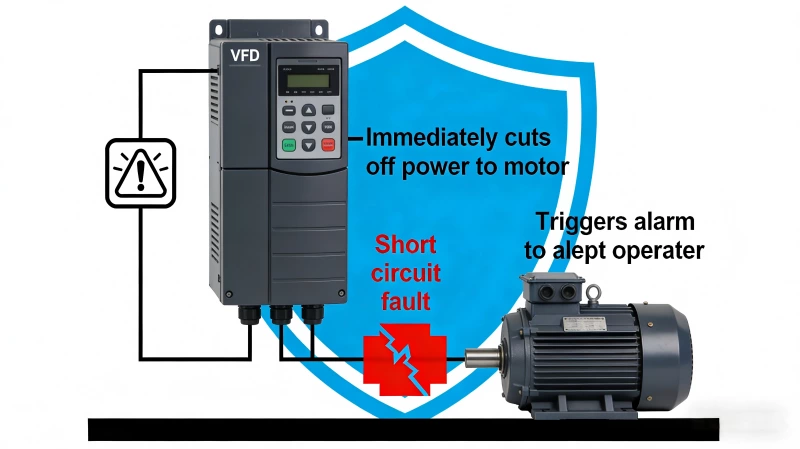
Short circuit protection is implemented in the VFD Power Distribution Cabinets to prevent the system from being damaged by a short circuit. The VFD will immediately cut off the power supply to the motor and trigger an alarm to alert the operator of the fault.
5. Control Interface and User Settings
The Role of the Control Interface
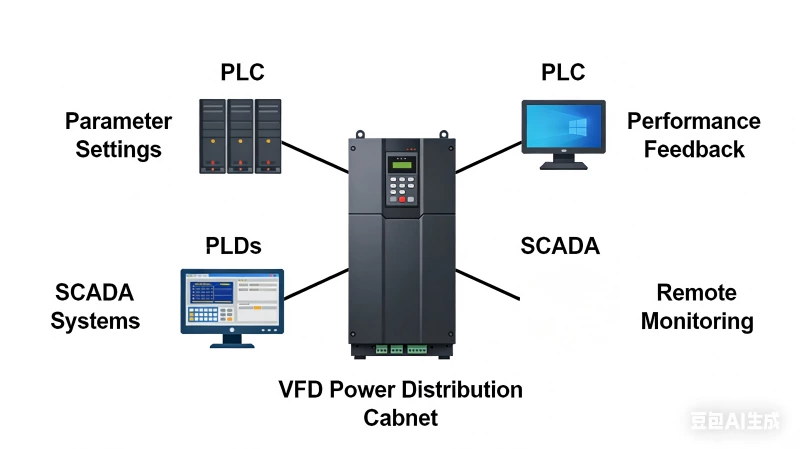
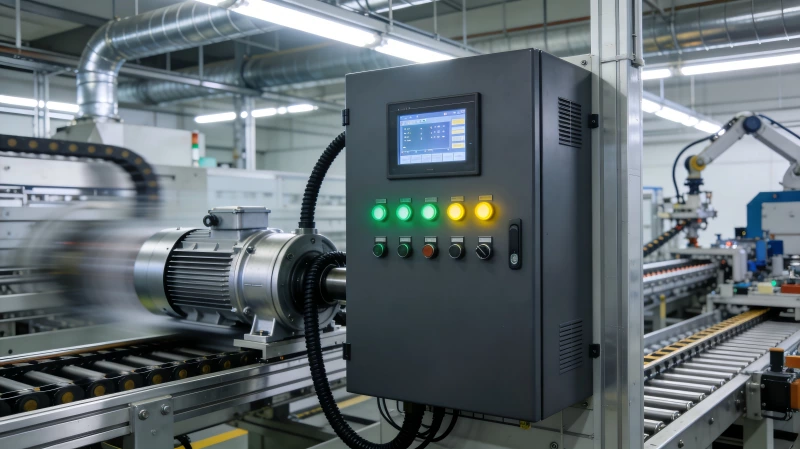
The control interface in a VFD Power Distribution Cabinet allows operators to set parameters such as motor speed, acceleration rates, deceleration rates, and torque limits. The control interface also enables communication between the VFD and other system components, such as PLCs, SCADA systems, or remote monitoring systems.
Modern VFD control panels often come with digital displays or touchscreen interfaces, allowing for easy configuration and real-time monitoring of motor performance.
Feedback Mechanisms
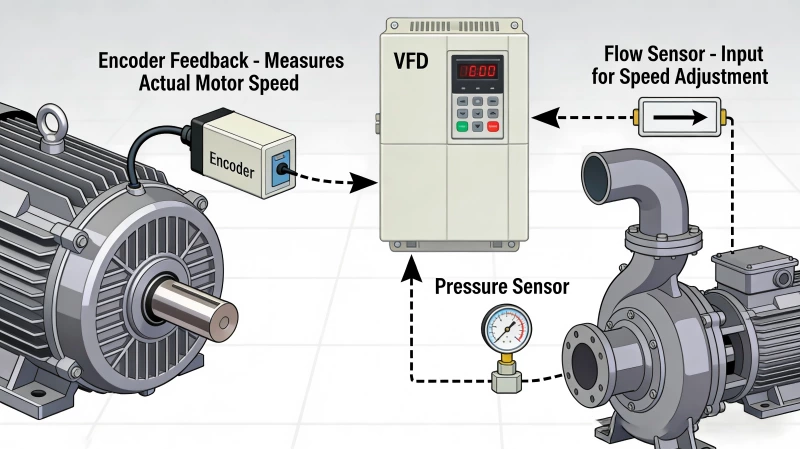
To ensure precise control, VFD Power Distribution Cabinets incorporate feedback mechanisms. These mechanisms send data from the motor back to the VFD, enabling it to adjust output settings dynamically. Common feedback systems include:
Encoder feedback: Measures the actual speed of the motor.
Pressure and flow sensors: Provide input data to adjust motor speed in systems like pumps and fans.
By constantly monitoring the system's performance, VFD Power Distribution Cabinets can adjust motor operation to maintain optimal efficiency.
6. Key Advantages of VFD Power Distribution Cabinets
Energy Savings
One of the most significant advantages of VFD Power Distribution Cabinets is their ability to save energy. By adjusting motor speed to match actual demand, VFDs prevent motors from running at full speed when not needed, leading to significant energy savings—often as much as 30% or more.
Improved Motor Life
The soft-start and soft-stop functions provided by VFD Power Distribution Cabinets reduce mechanical wear and tear, extending the life of motors and associated equipment. By controlling acceleration and deceleration, the VFD minimizes stress on the motor, preventing sudden jerks or vibrations.
Enhanced System Performance
With precise motor control, VFD Power Distribution Cabinets help optimize system performance. Whether in HVAC, pumping systems, or industrial automation, VFDs ensure that motors operate at the most efficient speed for each task, improving overall system efficiency.
Conclusion: The Importance of Understanding VFD Power Distribution Cabinets
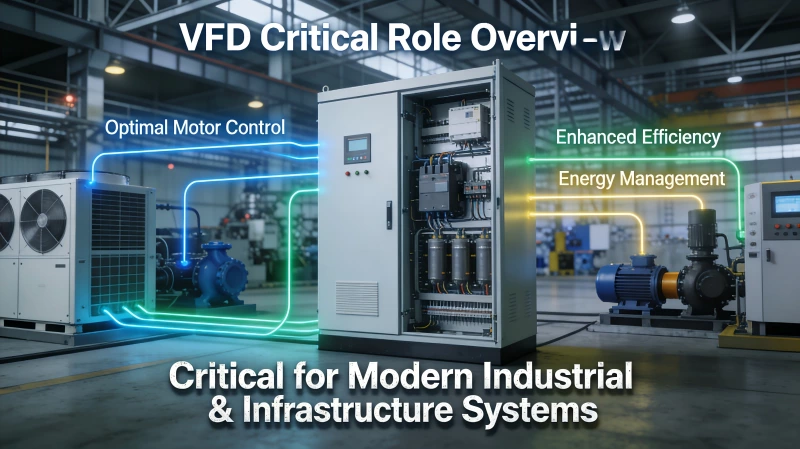
In conclusion, VFD Power Distribution Cabinets are critical for modern industrial and infrastructure systems. Understanding the operating logic and principles of these systems is essential for optimizing motor control, enhancing system efficiency, and improving energy management. By controlling motor speed and torque through the dynamic adjustment of voltage and frequency, VFD Power Distribution Cabinets help reduce energy waste, extend equipment life, and ensure smooth, reliable operations.
Selecting the right VFD Power Distribution Cabinet requires careful consideration of factors such as motor load characteristics, environmental conditions, and integration with other control systems. When properly selected and maintained, VFD Power Distribution Cabinets can significantly enhance the performance and sustainability of industrial systems.