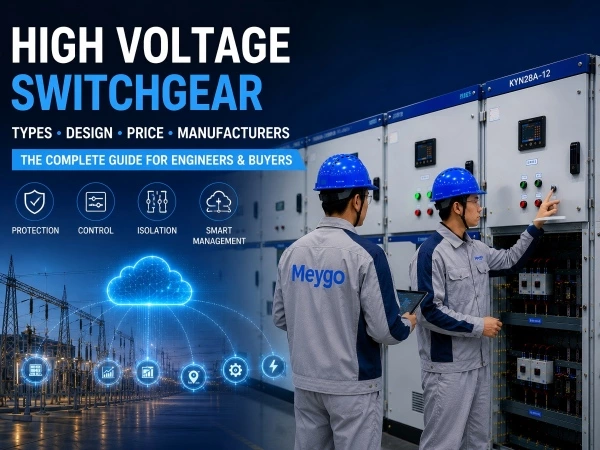
High Voltage Switchgear Solutions: Types, Price, Manufacturers & Design
What are they? They are critical electrical switchgear systems designed to control, protect, and isolate high-voltage electrical equipment.
Why are they important? Because unstable power distribution can lead to equipment damage, downtime, and safety risks.
Where are they used? In substations, power plants, renewable energy systems, and industrial facilities.
Who relies on them? Engineers, EPC contractors, and procurement professionals.
How do they work? By integrating circuit breaker systems, protection relays, and busbar systems to ensure reliable power distribution.
This article explores types, design, price, and manufacturers in depth.
Table of Contents
- High Voltage Switchgear Definition and System Overview
- High Voltage Switchgear Types: AIS vs GIS vs Hybrid
- High Voltage Switchgear Working Principle
- High Voltage Switchgear Components and Structure
- High Voltage Switchgear Design and Engineering
- High Voltage Switchgear Applications
- High Voltage Switchgear Standards (IEC)
- High Voltage Switchgear Installation
- High Voltage Switchgear Maintenance and Testing
- High Voltage Switchgear Price and Cost Analysis
- High Voltage Switchgear Manufacturers and Suppliers
- High Voltage vs Medium Voltage Switchgear
- High Voltage Switchgear Safety and Protection
- Future Trends: Digital and Smart Switchgear
- FAQ: High Voltage Switchgear
1. High Voltage Switchgear Definition and System Overview
What is High Voltage Switchgear (Definition)
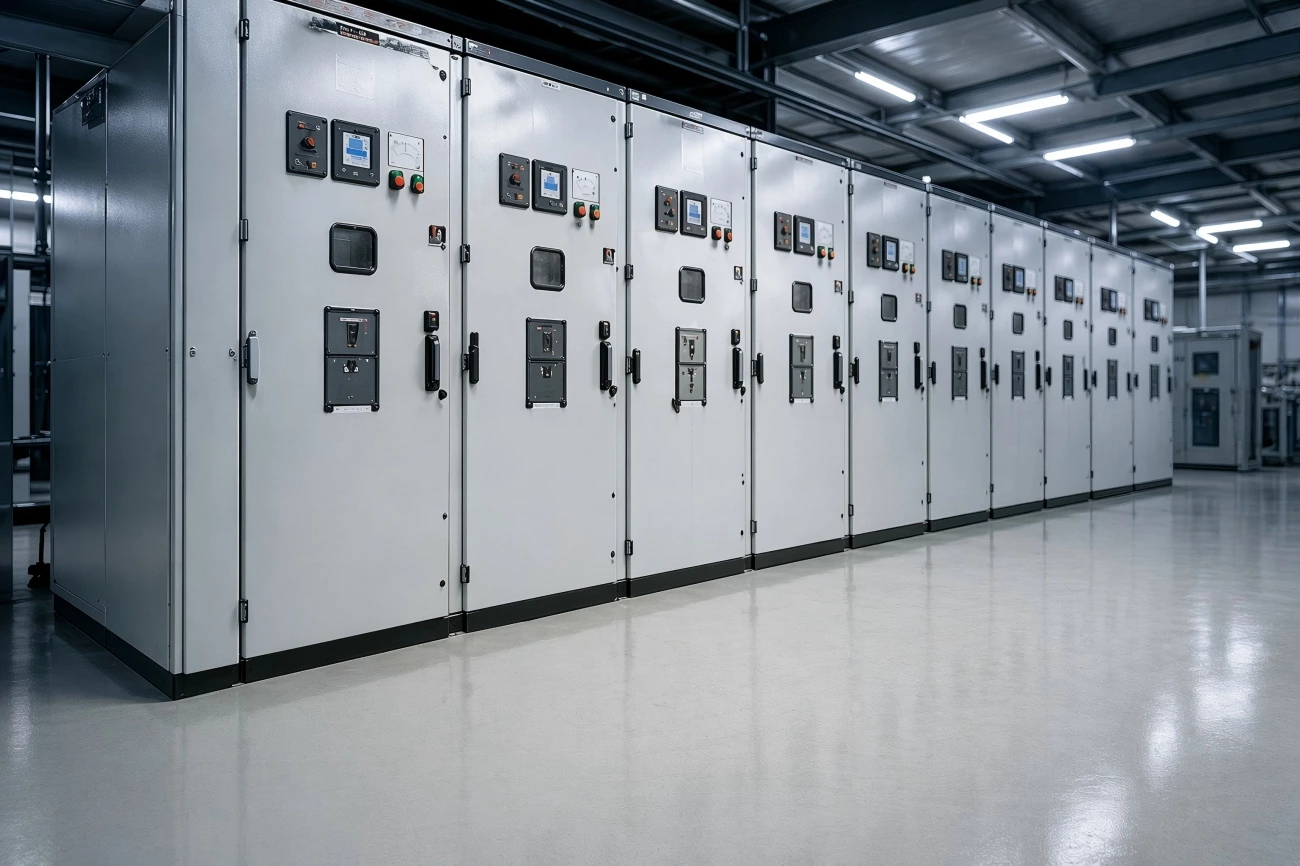
High voltage switchgear is a type of electrical switchgear system used to control, protect, and isolate electrical equipment operating at high voltage levels, generally above 36kV. It is a critical part of power distribution equipment in transmission networks and substations.
Its primary function is to ensure that electrical systems operate safely under both normal and fault conditions. When abnormal events such as short circuits or overloads occur, high voltage switchgear can rapidly disconnect the affected section, preventing damage to equipment and maintaining overall system stability.
From a standards perspective, high voltage switchgear is defined and regulated under the IEC 62271 series, which applies to switchgear and controlgear rated above 1kV.
👉 Authoritative standard reference:https://webstore.iec.ch/en/publication/71439
This standard framework, issued by the International Electrotechnical Commission, forms the technical foundation for design, testing, and application of high voltage switchgear worldwide.
High Voltage Switchgear System Overview
A high voltage switchgear system is an integrated solution composed of multiple coordinated devices rather than a single piece of equipment. It is widely used in substations, power plants, and industrial power distribution systems.
The system typically includes:
- Circuit breaker system (for interrupting fault currents)
- Disconnect switch (for isolation and maintenance safety)
- Protection relay (for detecting abnormal conditions)
- Busbar system (for distributing electrical energy)
- Monitoring and control units (for operational management)
👉 Technical classification reference:https://iec.ch/taxonomy/term/1003
The International Electrotechnical Commission (TC 17) specifically governs switchgear and controlgear standards, ensuring global consistency in system architecture and performance requirements.
It is important to understand that the reliability of a high voltage switchgear system depends on the coordination between these elements, rather than the performance of a single component.
Core Functions of High Voltage Switchgear
Within the power control system, high voltage switchgear performs several essential functions that ensure safe and continuous operation of electrical networks.
Fault Interruption
The switchgear can detect and interrupt fault currents caused by short circuits or equipment failure. This prevents damage to transformers, cables, and other critical assets.
Electrical Isolation
It allows specific sections of the network to be safely isolated for maintenance or emergency handling without affecting the entire system.
Load Switching Control
High voltage switchgear enables controlled switching operations during normal conditions, ensuring flexibility in system operation.
👉 Manufacturer technical example:Global manufacturers such as ABB demonstrate how these functions are integrated into modern switchgear solutions.
Position of High Voltage Switchgear in Power Systems
High voltage switchgear plays a central role in the entire power distribution chain, acting as a control and protection node between generation, transmission, and distribution.
It is typically installed in:
- Substation equipment systems
- Transmission switchgear networks
- Large-scale industrial electrical systems
By managing power flow and isolating faults, high voltage switchgear ensures that electricity can be transmitted safely from power plants to end users. Without it, large-scale grid infrastructure would not be able to operate reliably.
Key Characteristics of High Voltage Switchgear
High voltage switchgear is designed to meet demanding operational and environmental requirements. Its key characteristics include:
High Operational Reliability
It must ensure continuous performance under high electrical loads, supporting stable and uninterrupted power supply.
Advanced Insulation System
Due to high voltage stress, advanced insulation materials and designs are required to prevent leakage and breakdown.
Robust Enclosure Structure
Most systems adopt metal-enclosed designs that provide protection against dust, moisture, and corrosion, ensuring long-term durability.
Long Service Life
With proper maintenance, high voltage switchgear offers extended operational life and reduced failure rates.
👉 Industry product overview: Companies like Schneider Electric provide practical insights into switchgear performance and system reliability.
Why High Voltage Switchgear is Essential
High voltage switchgear is indispensable for ensuring safety, efficiency, and reliability in modern power systems.
As electrical demand continues to grow across industries such as energy, manufacturing, and infrastructure, the need for stable power supply becomes increasingly critical. Any failure in electrical systems can result in operational disruptions and economic losses.
High voltage switchgear minimizes these risks by enabling precise control, rapid fault response, and safe system operation.
In real-world engineering projects, integrated power distribution systems combining high voltage switchgear, transformers, and monitoring systems have proven to significantly enhance system reliability and energy efficiency across various applications.
2. High Voltage Switchgear Types: AIS vs GIS vs Hybrid
Overview of High Voltage Switchgear Types
High voltage switchgear can be broadly classified into three main types based on insulation methods and structural design:
- AIS (Air Insulated Switchgear)
- GIS (Gas Insulated Switchgear)
- Hybrid Switchgear
These types differ significantly in terms of insulation technology, installation environment, cost, and application scenarios. Understanding these differences is essential for selecting the right high voltage switchgear solution.
👉 IEC classification reference:https://iec.ch/taxonomy/term/1003
According to the International Electrotechnical Commission, switchgear classification is primarily based on insulation medium and structural configuration, which directly affects performance and application suitability.
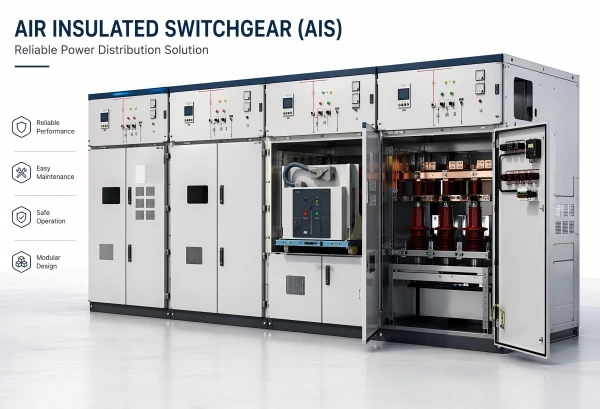
Air Insulated Switchgear (AIS)
What is AIS High Voltage Switchgear
Air Insulated Switchgear (AIS) uses air as the primary insulation medium between conductive parts. It is the most traditional and widely used type of high voltage switchgear.
👉 Technical overview:
Hitachi Energy provides detailed insights into AIS structure and applications.
Key Characteristics of AIS
- Uses atmospheric air for insulation
- Large physical footprint
- Simple structure and easy maintenance
- Lower initial investment cost
AIS systems are typically installed in outdoor switchgear systems due to their size and exposure requirements.
Advantages of AIS
- Cost-effective for large-scale installations
- Easy to inspect and maintain
- Mature and widely proven technology
Limitations of AIS
- Requires significant installation space
- Sensitive to environmental conditions (dust, humidity, pollution)
- Higher maintenance frequency compared to GIS
Typical Applications of AIS
AIS is commonly used in:
- Transmission substations
- Rural and suburban grid infrastructure
- Industrial facilities with sufficient space
Gas Insulated Switchgear (GIS)
What is GIS High Voltage Switchgear
Gas Insulated Switchgear (GIS) uses sulfur hexafluoride (SF₆) gas as the primary insulation medium. All live components are enclosed within a sealed metal enclosure filled with insulating gas.
👉 Product-level reference:
Siemens Energy provides detailed information on GIS systems and configurations.
Key Characteristics of GIS
- Compact and space-saving design
- Fully enclosed metal structure
- High resistance to environmental factors
- Advanced insulation performance
Advantages of GIS
- Requires significantly less space (up to 90% reduction vs AIS)
- High reliability and low failure rate
- Minimal maintenance requirements
- Suitable for harsh environments
Limitations of GIS
- Higher initial cost
- Requires specialized technical support
- Environmental concerns related to SF₆ gas
Typical Applications of GIS
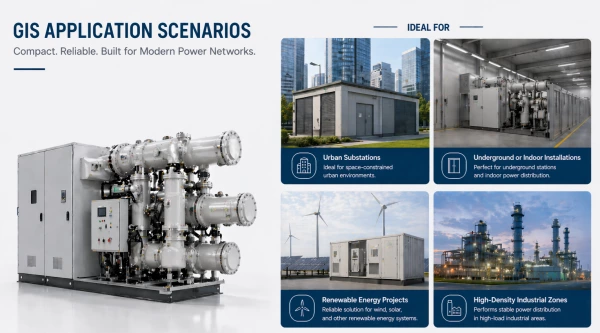
GIS is widely used in:
- Urban substations
- Underground or indoor installations
- Renewable energy projects
- High-density industrial zones
Hybrid Switchgear
What is Hybrid High Voltage Switchgear
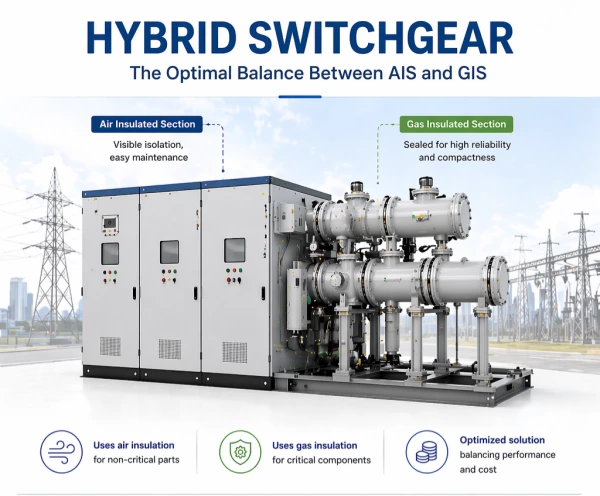
Hybrid switchgear combines features of both AIS and GIS technologies. It typically uses gas insulation for critical components while maintaining air insulation for others.
👉 Technology overview:
Hitachi Energy explains hybrid switchgear as a flexible solution balancing performance and cost.
Key Characteristics of Hybrid Switchgear
- Combination of AIS and GIS structures
- Moderate space requirements
- Flexible design configurations
- Optimized cost-performance ratio
Advantages of Hybrid Switchgear
- Reduced footprint compared to AIS
- Lower cost compared to full GIS
- Easier installation and expansion
- Balanced performance and investment
Limitations of Hybrid Switchgear
- More complex than AIS
- Not as compact as GIS
- Requires careful engineering design
Typical Applications of Hybrid Switchgear
Hybrid systems are ideal for:
- Medium-space substations
- Industrial power distribution
- Grid modernization projects
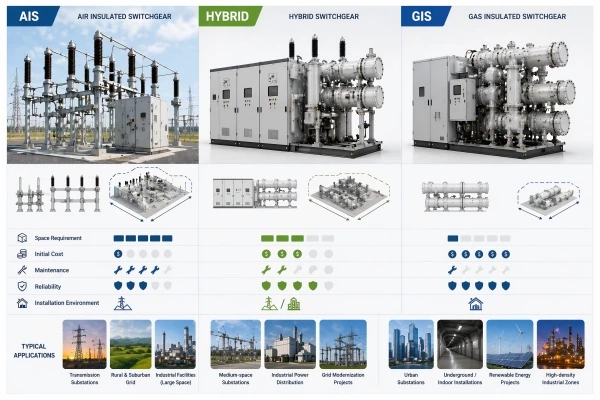
AIS vs GIS vs Hybrid Switchgear Comparison
| Feature | AIS | GIS | Hybrid |
|---|---|---|---|
| Insulation Medium | Air | SF₆ Gas | Mixed |
| Space Requirement | Large | Very Compact | Medium |
| Initial Cost | Low | High | Medium |
| Maintenance | High | Low | Medium |
| Reliability | Good | Excellent | High |
| Installation Environment | Outdoor | Indoor/Urban | Flexible |
How to Choose the Right High Voltage Switchgear Type
Selecting the right type of high voltage switchgear depends on several key factors:
Space Availability
- Limited space → GIS
- Large open area → AIS
Budget Constraints
- Low budget → AIS
- High-performance investment → GIS
- Balanced → Hybrid
Environmental Conditions
- Harsh environment → GIS
- Normal conditions → AIS
Maintenance Capability
- Limited technical support → GIS
- Easy access maintenance → AIS
3.High Voltage Switchgear Working Principle Explained
Basic Working Principle of High Voltage Switchgear
The high voltage switchgear working principle is based on the coordinated operation of switching devices, protection systems, and insulation structures to control and protect electrical power systems.
In simple terms, high voltage switchgear continuously monitors the electrical network. When abnormal conditions such as short circuits, overloads, or insulation failures occur, it automatically detects the fault and interrupts the current flow to prevent damage.
👉 IEC standard framework reference:https://webstore.iec.ch/en/publication/71439
According to the International Electrotechnical Commission, high voltage switchgear must be capable of both normal switching operations and fault interruption under extreme electrical stress.
Step-by-Step Working Process
The working process of high voltage switchgear can be understood in several sequential steps within a power control system:
Step 1 – Normal Operation Monitoring
Under normal conditions, the switchgear allows electrical current to flow through the system via conductors and busbars. At the same time, protection relays continuously monitor parameters such as:
- Voltage levels
- Current flow
- Frequency stability
This real-time monitoring ensures early detection of abnormal conditions.
Step 2 – Fault Detection
When a fault occurs, such as a short circuit or overload, the protection relay system detects the abnormal current instantly.
The detection is based on predefined protection settings, which determine whether the condition exceeds safe operating limits.
👉 Protection system reference:https://www.se.com/ww/en/work/products/medium-voltage-switchgear-and-energy-automation/
Technical solutions from Schneider Electric demonstrate how modern protection systems enable fast and accurate fault identification.
Step 3 – Signal Transmission
Once a fault is detected, the protection relay sends a trip signal to the circuit breaker system.
This signal transmission must occur within milliseconds to prevent system damage and ensure safety.
Step 4 – Circuit Interruption
The circuit breaker opens and interrupts the fault current. This is one of the most critical processes in the high voltage switchgear working principle.
Siemens Energy explains that modern circuit breakers use advanced arc quenching technologies to safely interrupt high fault currents.
During interruption, an electric arc is generated. The switchgear must quickly extinguish this arc to prevent equipment damage.
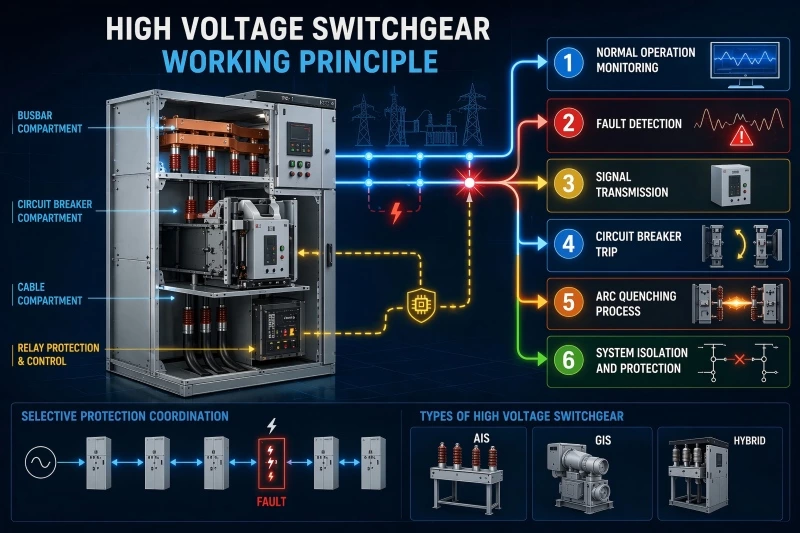
Step 5 – Arc Quenching Process
When contacts inside the circuit breaker separate, an arc forms due to ionized air or gas.
High voltage switchgear uses different arc quenching technologies, depending on type:
- Air blast (AIS systems)
- SF₆ gas insulation (GIS systems)
- Vacuum interruption
The rapid extinction of the arc ensures safe disconnection and prevents system instability.
Step 6 – System Isolation and Protection
After interruption, the faulty section of the system is isolated. This prevents the fault from spreading to other parts of the grid.
At this stage, operators can safely inspect and repair the affected equipment.
Key Operating Mechanisms
To better understand the high voltage switchgear working principle, it is important to recognize the key mechanisms involved:
Switching Mechanism
Responsible for opening and closing electrical circuits during normal and fault conditions.
Protection Mechanism
Ensures the system reacts quickly to abnormal conditions using electrical protection systems.
Insulation Mechanism
Prevents unintended current flow and maintains system safety under high voltage stress.
Coordination Between Protection and Switching
One of the most critical aspects of high voltage switchgear operation is the coordination between protection relays and switching devices.
This coordination ensures that:
- Faults are detected accurately
- Only the affected section is isolated
- The rest of the system continues operating
This concept is known as selective protection, which is essential for maintaining reliable power distribution in large-scale electrical networks.
Working Principle in Different Switchgear Types
Although the fundamental principle remains the same, the working method varies slightly depending on the type of switchgear:
- AIS (Air Insulated Switchgear)
Uses air as insulation and relies on open structures - GIS (Gas Insulated Switchgear)
Uses SF₆ gas for insulation and arc quenching in sealed enclosures - Hybrid Switchgear
Combines both technologies for optimized performance
Hitachi Energy provides practical insights into different switchgear operating methods.
Why the Working Principle Matters
Understanding the high voltage switchgear working principle is essential for:
- Selecting the right equipment
- Ensuring system safety
- Improving operational efficiency
- Reducing downtime and maintenance costs
In real-world engineering applications, systems designed with optimized protection coordination and fast interruption capability significantly improve reliability and reduce operational risks.
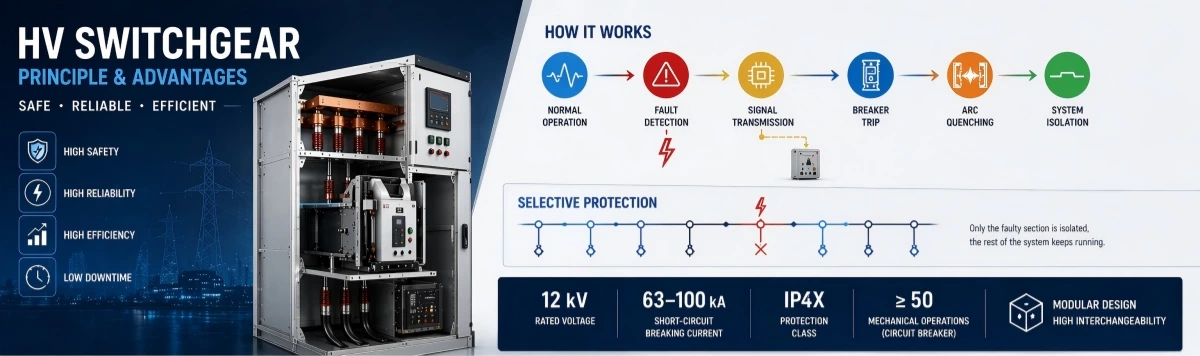
Summary of High Voltage Switchgear Working Principle
The working principle of high voltage switchgear is based on a fast and coordinated process of monitoring, detection, interruption, and isolation.
Its ability to respond instantly to faults ensures the safety and stability of modern power systems.
Understanding this principle provides a strong foundation for exploring components, design, and maintenance strategies in the following sections.
4.High Voltage Switchgear Components and Structure
Overview of High Voltage Switchgear Components
A high voltage switchgear system is composed of multiple interconnected devices that work together to ensure safe, stable, and efficient power distribution. Each component performs a specific function within the overall electrical protection and control system.
The performance and reliability of high voltage switchgear depend not only on the quality of individual parts but also on how these components are integrated into a complete system architecture.
In modern power distribution equipment, the structural design must support:
- Reliable fault interruption
- Safe electrical isolation
- Stable current transmission
- Efficient system monitoring
- Long-term operational durability
Understanding the structure of high voltage switchgear is essential for engineers, EPC contractors, and procurement professionals when selecting equipment for substations, industrial facilities, and utility projects.
Main Components of High Voltage Switchgear
-
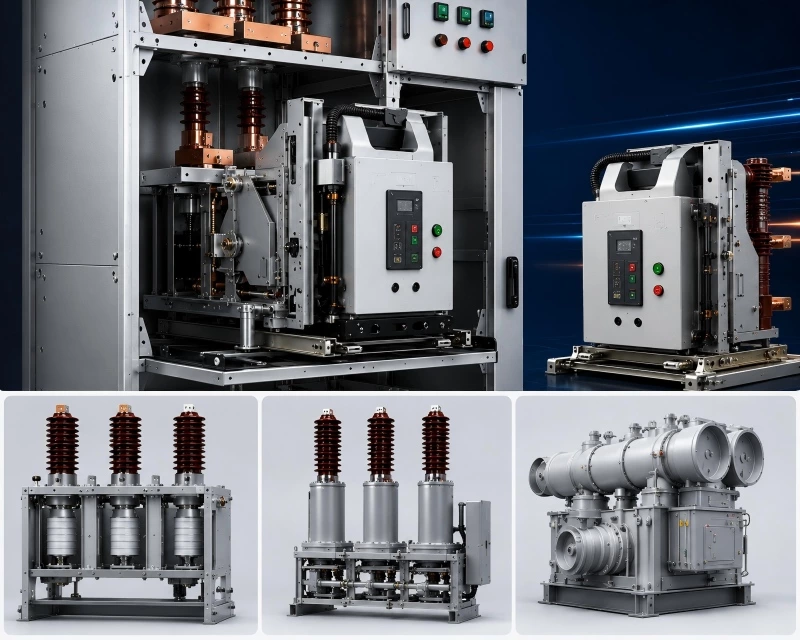
Circuit Breaker System
The circuit breaker system is the most critical operating component inside high voltage switchgear. Its primary role is to interrupt fault currents and disconnect abnormal electrical conditions before damage spreads through the network.
During normal operation, the circuit breaker remains closed, allowing electrical current to flow through the system. When a fault such as a short circuit or overload occurs, the breaker opens rapidly to isolate the affected section.
Modern high voltage switchgear commonly uses:
- Vacuum circuit breakers
- SF₆ circuit breakers
- Gas-insulated interruption systems
The interruption process must occur within milliseconds to minimize equipment damage and maintain grid stability.
Because circuit breakers directly determine fault interruption capability, they are considered one of the most important elements in power distribution equipment.
-
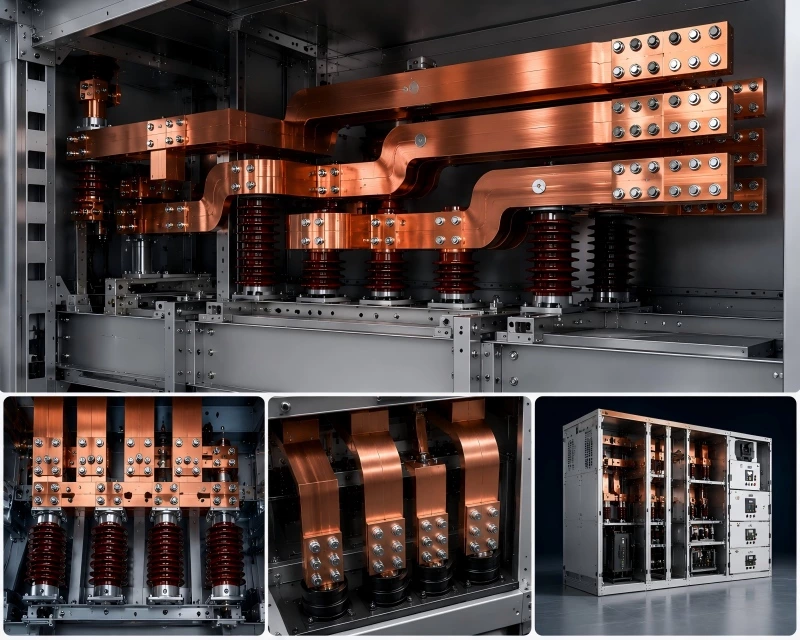
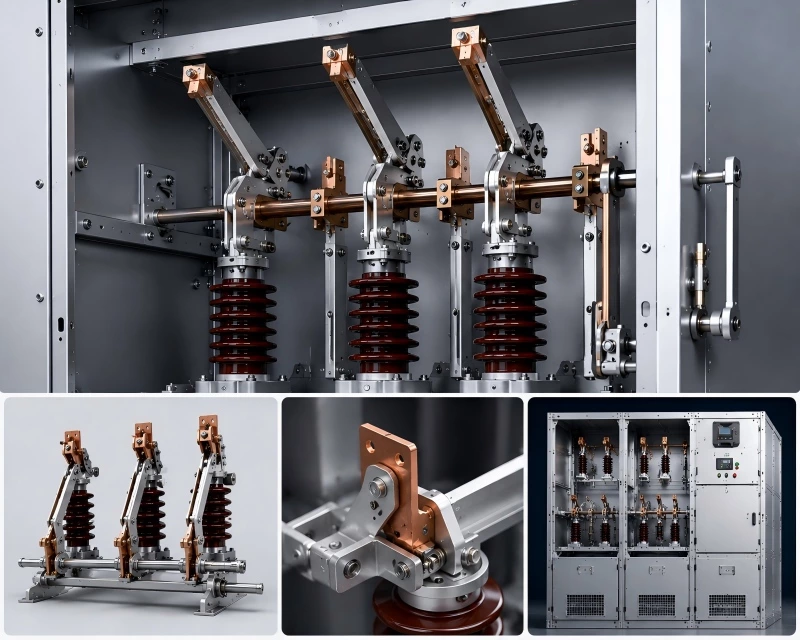
Busbar System
The busbar system is responsible for carrying and distributing electrical energy within the switchgear assembly.
Busbars are typically manufactured using high-conductivity copper or aluminum materials to support large current loads while minimizing energy loss.
An efficient busbar system provides several operational advantages:
- Stable current transmission
- Improved thermal performance
- Lower electrical resistance
- Higher short circuit withstand strength
In large substations, busbar arrangement also affects operational flexibility and future system expansion capability.
Reliable busbar performance is essential for maintaining stable power supply in utility and industrial applications.
-
Disconnect Switch
The disconnect switch, also known as an isolation switch, is designed to provide visible electrical isolation during maintenance or emergency conditions.
Unlike circuit breakers, disconnect switches are not intended to interrupt heavy load currents. Instead, they operate after the fault current has already been cleared.
Their main functions include:
- Isolating equipment safely
- Supporting maintenance procedures
- Preventing accidental energization
Disconnect switches play a critical role in ensuring maintenance safety within high voltage substations and transmission systems.
-
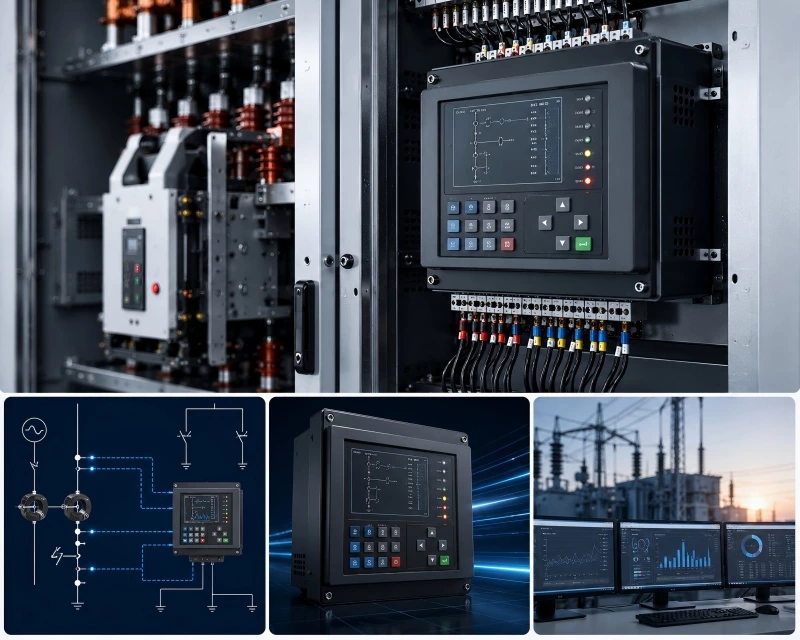
Protection Relay System
The protection relay system serves as the intelligent monitoring and decision-making unit within high voltage switchgear.
It continuously monitors electrical conditions such as:
- Current levels
- Voltage conditions
- Frequency variations
- Fault signals
When abnormal operating conditions are detected, the relay automatically sends a trip command to the circuit breaker system.
Modern digital protection relays support advanced functions including:
- Real-time fault analysis
- Event recording
- Remote communication
- Intelligent diagnostics
These capabilities significantly improve fault response speed and overall system reliability.
-
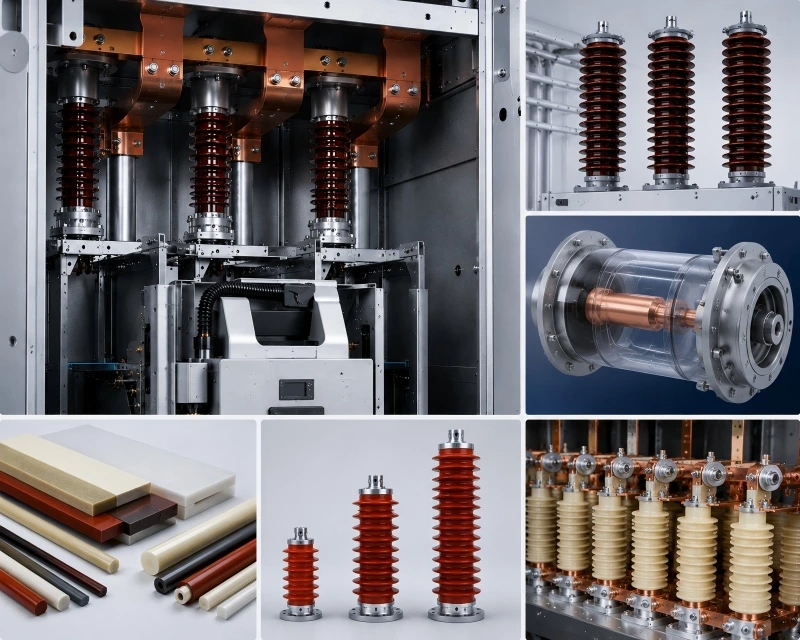
Insulation Components
High voltage switchgear requires highly reliable insulation systems to prevent unintended electrical discharge between energized conductors and grounded structures.
Depending on the switchgear type, insulation may be achieved through:
- Air insulation
- SF₆ gas insulation
- Vacuum insulation
- Solid dielectric materials
The insulation system directly influences:
- Operational safety
- Arc resistance capability
- Equipment reliability
- Long-term service life
Because high voltage environments involve extreme electrical stress, insulation quality is one of the most important technical considerations in switchgear manufacturing.
-
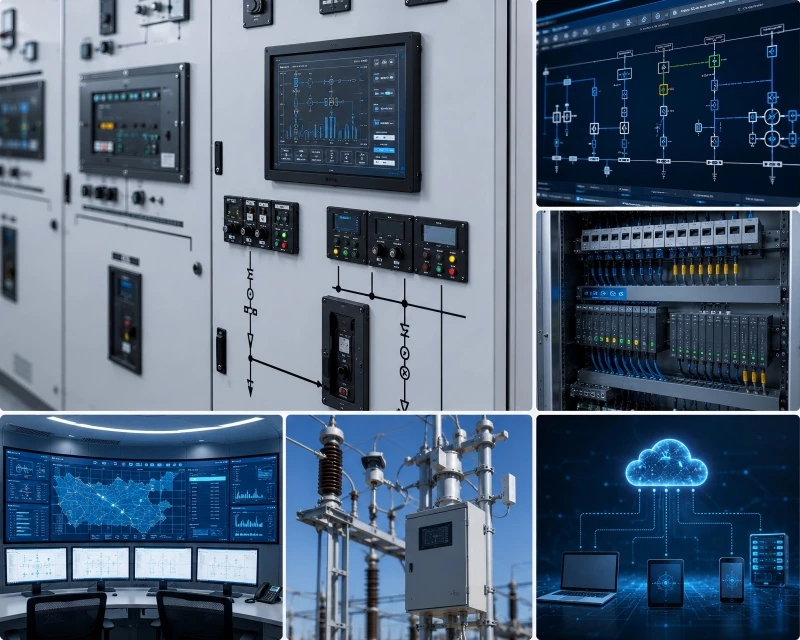
Control and Monitoring Units
Modern high voltage switchgear integrates advanced control and monitoring technologies to improve operational visibility and automation capability.
These systems allow operators to monitor equipment status in real time and respond quickly to abnormal conditions.
Typical functions include:
- Remote switching operation
- System status monitoring
- Alarm management
- Fault indication
- Data communication
In intelligent substations and smart grid applications, digital monitoring systems significantly improve maintenance efficiency and reduce operational downtime.
-
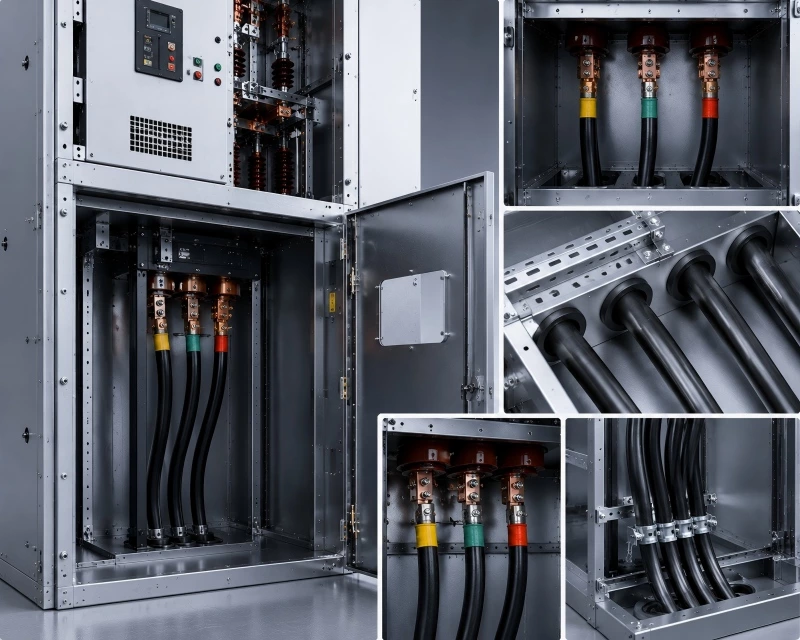
Cable Connection Sections
The cable connection section is responsible for connecting incoming and outgoing power cables to the switchgear system.
This section must provide:
- Secure cable termination
- Safe electrical clearance
- Efficient heat dissipation
- Easy maintenance accessibility
In high-current applications, proper cable arrangement is critical for preventing overheating and ensuring long-term operational reliability.
Well-designed cable connection systems also improve installation efficiency during project implementation.
Coordination Between Components
The reliability of high voltage switchgear depends on the effective coordination of all functional components.
Each device performs a specific role, but system stability can only be achieved when switching, protection, insulation, and monitoring functions operate together seamlessly.
Effective component coordination improves:
- Fault interruption performance
- Electrical safety
- System reliability
- Maintenance efficiency
In practical engineering projects, integrated component coordination is essential for achieving stable and energy-efficient power distribution systems across industrial, infrastructure, and utility applications.
Summary of High Voltage Switchgear Components
High voltage switchgear consists of multiple specialized functional components that together ensure safe and reliable electrical operation.
Key elements such as circuit breakers, busbar systems, disconnect switches, protection relays, insulation systems, and monitoring units form the foundation of modern power distribution infrastructure.
Understanding these components is essential for selecting suitable switchgear solutions and ensuring long-term operational stability.
5.High Voltage Switchgear Design and Engineering
-
Importance of High Voltage Switchgear Design
The design and engineering of high voltage switchgear directly determine the safety, reliability, and operational efficiency of a power distribution system.
A well-engineered switchgear solution must not only meet electrical performance requirements but also adapt to environmental conditions, installation space, operational demands, and future expansion needs.
In modern power systems, switchgear design has evolved from simple electrical control into a comprehensive engineering discipline involving:
- Electrical engineering
- Thermal management
- Mechanical structure optimization
- Protection coordination
- Intelligent monitoring integration
Poor design can lead to overheating, insulation failure, operational instability, and increased maintenance costs. Therefore, engineering quality is one of the most critical factors in long-term system reliability.
-
Core Design Objectives of High Voltage Switchgear
The primary objective of high voltage switchgear engineering is to ensure safe and continuous operation under both normal and fault conditions.
Key design objectives include:
- Reliable fault interruption
- Stable power transmission
- Electrical safety protection
- Efficient heat dissipation
- Long service life
- Reduced maintenance requirements
In large-scale substations and industrial applications, switchgear systems must also support operational flexibility and future scalability.
Modern engineering practices increasingly focus on balancing performance, lifecycle cost, and energy efficiency.
-
Electrical Design Considerations
Electrical design is the foundation of any high voltage switchgear system.
Engineers must carefully evaluate operating conditions and system parameters before selecting equipment ratings and configurations.
-
Rated Voltage and Current
The switchgear must be designed according to the rated system voltage and expected load current.
Improper rating selection may result in:
- Equipment overheating
- Reduced insulation performance
- Shortened service life
- Increased operational risk
The design must also consider future load expansion to avoid costly upgrades later.
-
Short Circuit Withstand Capability
One of the most important engineering considerations is the ability to withstand short circuit currents.
During fault conditions, extremely high current levels generate strong thermal and mechanical stress. The switchgear structure and internal conductors must be capable of tolerating these forces without damage.
This is essential for maintaining system stability and electrical safety.
-
Insulation Coordination
Proper insulation coordination ensures that the switchgear can operate safely under high voltage stress and transient overvoltage conditions.
Engineers must evaluate:
- Insulation distance
- Dielectric strength
- Surge protection requirements
- Environmental pollution levels
Effective insulation coordination significantly improves operational reliability and reduces the risk of flashover failure.
-
Mechanical Structure Engineering
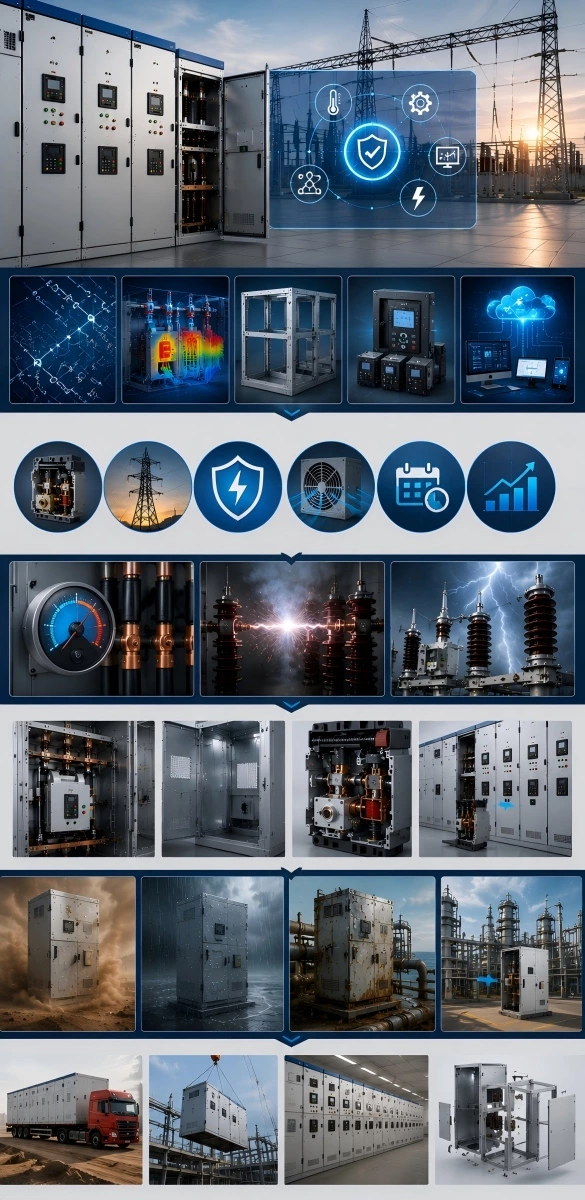
Mechanical engineering plays a critical role in ensuring the durability and safety of high voltage switchgear.
The structural design must provide sufficient mechanical strength while maintaining operational accessibility and environmental protection.
- Metal Enclosed Structure
Most modern systems adopt metal enclosed switchgear or metal clad switchgear structures to improve operational safety.
These enclosures provide protection against:
- Dust
- Moisture
- Corrosion
- External mechanical impact
High-quality enclosure engineering is especially important in harsh industrial environments such as mining, chemical plants, and coastal infrastructure.
-
Internal Arc Resistance Design
Internal arc faults are among the most dangerous failures in switchgear systems.
To improve safety, advanced high voltage switchgear designs incorporate arc-resistant structures that:
- Redirect arc pressure
- Reduce thermal impact
- Protect operating personnel
- Minimize equipment damage
Arc-resistant engineering is increasingly becoming a standard requirement in modern substations and industrial power systems.
-
Modular Design Concept
Modern switchgear systems increasingly adopt modular switchgear design principles.
Modular engineering offers several advantages:
- Easier transportation and installation
- Faster maintenance
- Flexible expansion capability
- Simplified component replacement
This approach is particularly beneficial in large infrastructure and EPC projects where future scalability is important.
-
Thermal Management in Switchgear Engineering
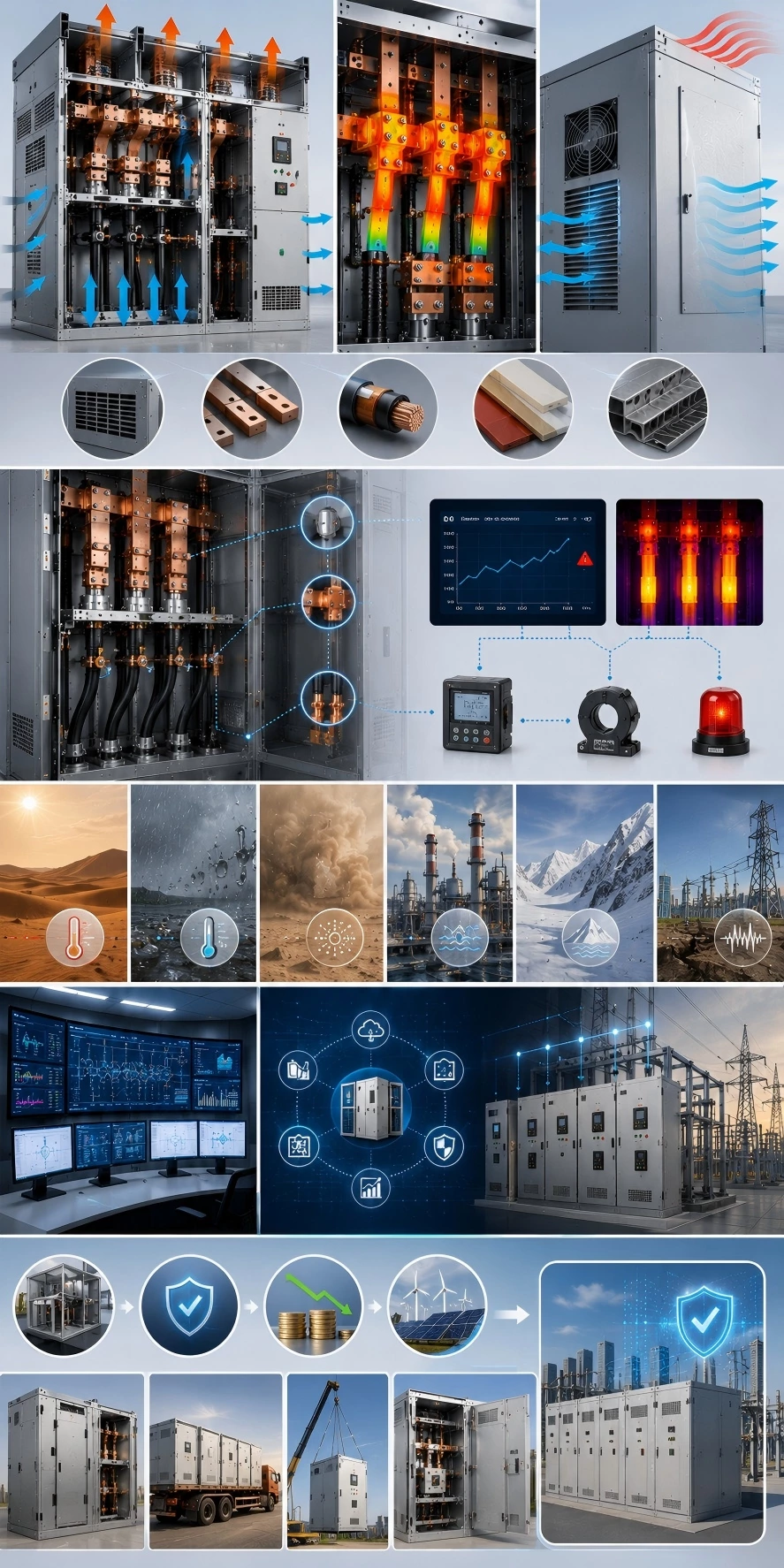
Thermal performance is a major factor affecting switchgear reliability and lifespan.
Electrical current flowing through conductors generates heat continuously. If heat is not properly controlled, excessive temperature rise may damage insulation materials and reduce equipment life.
- Heat Dissipation Design
Effective heat dissipation is achieved through:
- Ventilation systems
- Optimized conductor layout
- Thermal-resistant materials
- Airflow channel design
Proper thermal engineering improves overall system efficiency and operational stability.
-
Temperature Monitoring
Modern intelligent switchgear often integrates temperature monitoring devices for:
- Busbar temperature detection
- Cable connection monitoring
- Overheating alarm functions
These systems support predictive maintenance and help reduce unexpected failures.
-
Environmental Design Considerations
High voltage switchgear must often operate under challenging environmental conditions.
Engineering design must therefore consider:
- Ambient temperature
- Humidity levels
- Dust pollution
- Corrosive atmosphere
- Altitude conditions
- Seismic requirements
For outdoor applications, enclosure protection level and weather resistance become especially important.
In coastal or chemical industry environments, corrosion-resistant materials are commonly used to extend equipment service life.
-
Intelligent and Digital Engineering Trends
Modern intelligent switchgear is becoming an essential part of smart grid infrastructure.
Engineering design increasingly integrates digital technologies such as:
- Remote monitoring systems
- Intelligent protection relays
- Condition monitoring
- Predictive maintenance platforms
- SCADA communication systems
These technologies significantly improve operational efficiency and reduce maintenance costs.
Digital engineering also enables faster fault diagnosis and better lifecycle management for utility and industrial power systems.
-
Engineering Challenges in High Voltage Switchgear Projects
Despite technological advancements, switchgear engineering still faces several challenges:
-
Space Limitation
Urban substations and industrial facilities often have limited installation space, requiring compact switchgear solutions.
-
System Reliability Requirements
Critical infrastructure projects demand extremely high operational reliability and minimal downtime.
-
Cost Control
Engineering teams must balance performance, safety, and budget constraints during equipment selection and system configuration.
-
Renewable Energy Integration
The rapid growth of renewable energy systems introduces new challenges related to grid stability and fluctuating load conditions.
These factors make engineering optimization increasingly important in modern power distribution projects.
-
Practical Engineering Value of Optimized Switchgear Design
Well-designed high voltage switchgear systems provide long-term operational and economic benefits, including:
- Improved power reliability
- Reduced maintenance frequency
- Lower operational risk
- Enhanced energy efficiency
- Extended equipment lifespan
In practical engineering applications, integrated design solutions combining intelligent monitoring, optimized structural engineering, and reliable protection systems have significantly improved power distribution stability across industrial, infrastructure, and utility projects.
6.High Voltage Switchgear Applications
-
Importance of High Voltage Switchgear Applications
The applications of high voltage switchgear cover nearly every sector of modern power infrastructure. As electricity demand continues to increase worldwide, reliable power distribution and protection systems have become essential for industrial operations, public utilities, and critical infrastructure.
High voltage switchgear is widely used to control, protect, and isolate electrical systems operating under high load and high voltage conditions. Its ability to maintain system stability and minimize operational risks makes it indispensable in modern electrical engineering.
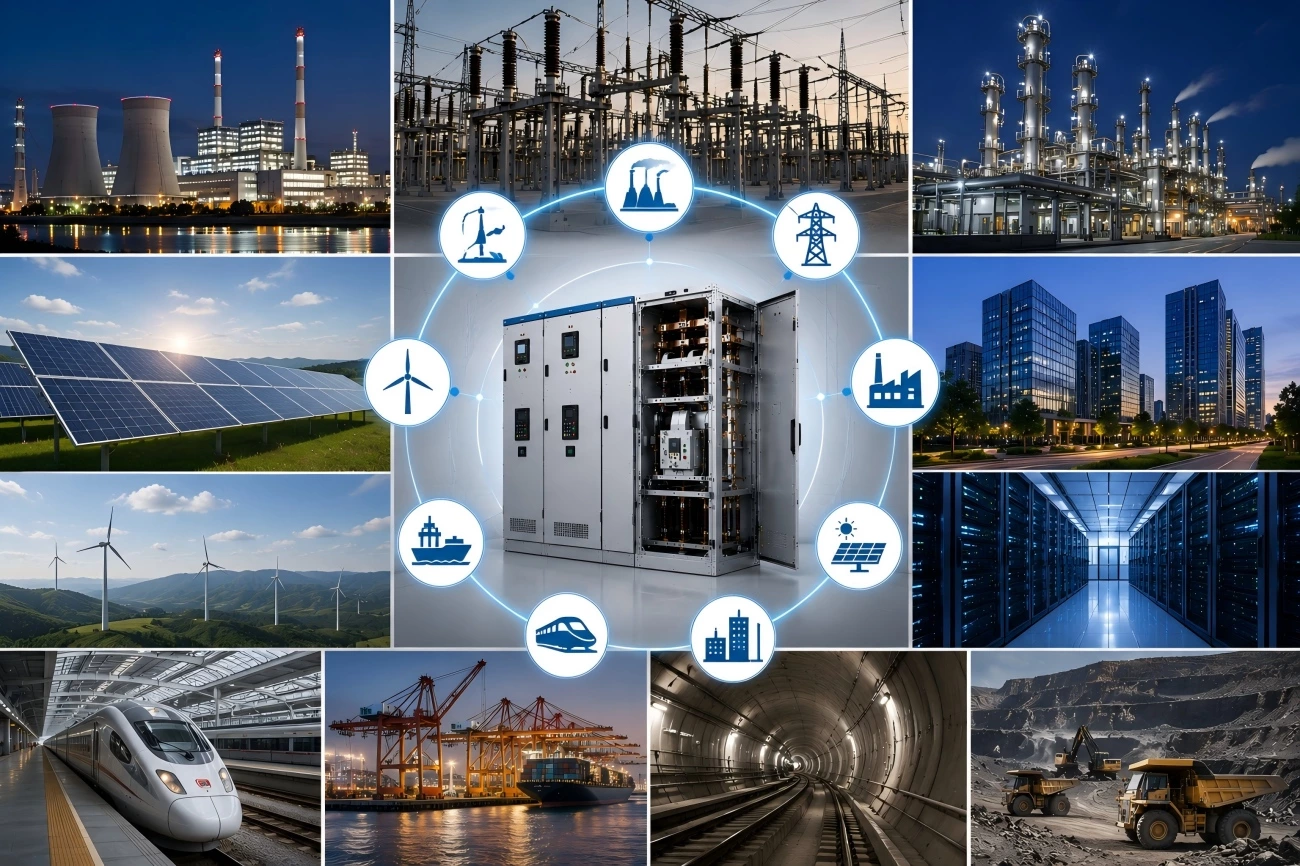
Today, high voltage switchgear applications extend across:
- Power generation systems
- Transmission and distribution networks
- Industrial manufacturing facilities
- Renewable energy projects
- Commercial infrastructure
- Transportation systems
- Government utility projects
Different industries require different switchgear configurations depending on voltage level, environmental conditions, operational continuity requirements, and installation space.
-
High Voltage Switchgear in Power Plants
Power plants are among the most important application environments for high voltage switchgear systems.
In thermal, hydroelectric, nuclear, and gas-fired power stations, switchgear is used to manage the flow of electricity generated by turbines before transmission to the utility grid.
Its primary functions in power plants include:
- Generator protection
- Load switching control
- Fault isolation
- Grid connection management
- System stability protection
Because power plants operate continuously under high electrical loads, switchgear systems must provide extremely high reliability and fault interruption capability.
Any unexpected failure can result in large-scale outages and significant economic losses.
-
High Voltage Switchgear in Substations
Substations are one of the most common application areas for high voltage switchgear.
In transmission and distribution substations, switchgear acts as the central control and protection equipment responsible for managing power flow between different voltage levels.
Its functions within substations include:
- Switching transmission lines
- Protecting transformers
- Isolating fault sections
- Managing incoming and outgoing feeders
- Supporting grid stability
Modern substations increasingly adopt intelligent switchgear systems integrated with remote monitoring and automation technologies.
These systems improve:
- Operational efficiency
- Fault response speed
- Maintenance management
- Grid reliability
High voltage switchgear is therefore considered one of the core elements of modern substation equipment.
-
Industrial Power Distribution Applications
Large industrial facilities require stable and continuous electrical power for production operations.
High voltage switchgear is widely used in industries such as:
- Mining
- Metallurgy
- Chemical processing
- Manufacturing
- Oil and gas
- Heavy machinery production
In industrial environments, switchgear systems must withstand:
- Heavy electrical loads
- Harsh operating conditions
- High temperatures
- Dust and moisture exposure
Reliable fault protection is especially important because electrical interruptions can cause production shutdowns, equipment damage, and safety risks.
In practical industrial applications, integrated switchgear and automation systems have significantly improved operational efficiency and power stability across manufacturing and heavy-industry projects.
-
Renewable Energy Applications
The rapid growth of renewable energy infrastructure has created increasing demand for advanced high voltage switchgear solutions.
Switchgear plays a critical role in connecting renewable power generation systems to the utility grid while ensuring stable and safe operation.
Solar Power Systems
In photovoltaic projects, high voltage switchgear is used for:
- Grid connection control
- Power collection systems
- Transformer protection
- Fault isolation
Reliable switchgear systems help maintain stable energy transmission from solar farms to utility networks.
Wind Power Projects
Wind power installations require switchgear capable of handling fluctuating load conditions and harsh environmental environments.
High voltage switchgear in wind farms supports:
- Turbine power collection
- Transmission line protection
- Grid synchronization
- Operational safety
Energy Storage Systems
Modern energy storage systems also rely on high voltage switchgear for:
- Battery system protection
- Power conversion control
- Grid integration management
As renewable energy adoption continues to grow, intelligent and highly reliable switchgear systems are becoming increasingly important.
-
Commercial Building Applications
Large commercial buildings require stable electrical infrastructure to support lighting, HVAC systems, elevators, security systems, and data operations.
High voltage switchgear is commonly used in:
- Commercial complexes
- Shopping centers
- Office buildings
- Hotels
- Hospitals
- Data centers
In these environments, operational continuity is critical. Even short-term outages can disrupt business operations and affect public safety.
Modern commercial projects increasingly prefer compact and intelligent switchgear systems that support efficient space utilization and digital monitoring functions.
-
Transportation Infrastructure Applications
Transportation systems depend heavily on reliable electrical infrastructure.
High voltage switchgear is widely applied in:
- Railway power systems
- Metro systems
- Airports
- Ports
- Tunnel infrastructure
These applications require high operational reliability because transportation interruptions can affect large populations and economic activity.
In port and transportation infrastructure projects, integrated switchgear systems help ensure stable power supply for operational equipment, lighting systems, and automated control networks.
-
Utility Grid Infrastructure Applications
Utility companies use high voltage switchgear throughout transmission and distribution networks to ensure stable grid operation.
| Key applications include: | In utility networks, switchgear supports: |
|---|---|
| Transmission switching stations | Power routing flexibility |
| Grid interconnection systems | Grid fault management |
| Regional substations | Load balancing |
| Utility distribution centers | Emergency isolation capability |
As smart grid technology continues developing, utility applications increasingly require intelligent digital switchgear with remote communication and automation features.
-
High Voltage Switchgear in Harsh Environments
Some application environments require specially engineered switchgear systems capable of operating under extreme conditions.
Mining Industry
Mining operations require highly durable switchgear systems resistant to dust, vibration, and heavy electrical loads.
Coastal Infrastructure
Coastal projects require corrosion-resistant switchgear enclosures due to high humidity and salt exposure
Chemical Industry
Chemical plants often require enhanced safety protection and explosion-resistant electrical systems.
Engineering adaptation to environmental conditions is essential for ensuring long-term operational reliability.
-
Intelligent Applications in Modern Power Systems
Modern high voltage switchgear applications increasingly integrate intelligent technologies such as:
- Remote monitoring systems
- Digital protection relays
- Predictive maintenance platforms
- SCADA integration
- Real-time diagnostics
These technologies improve operational visibility and significantly reduce maintenance downtime.
Intelligent switchgear is becoming a key component in next-generation smart grid and digital power distribution systems.
-
Summary of High Voltage Switchgear Applications
High voltage switchgear is widely used across power generation, substations, industrial facilities, renewable energy systems, commercial infrastructure, transportation networks, and utility grids.
Its ability to provide reliable protection, stable power control, and operational safety makes it an essential part of modern electrical infrastructure.
As energy systems continue evolving toward digitalization and renewable integration, the scope and importance of high voltage switchgear applications will continue to expand.
7.High Voltage Switchgear Installation
-
Importance of Proper High Voltage Switchgear Installation
Proper high voltage switchgear installation is essential for ensuring operational safety, system reliability, and long-term equipment performance.
Even high-quality switchgear systems may experience operational failures if installation procedures are not performed correctly. Improper installation can lead to:
- Insulation failure
- Overheating
- Arc faults
- Poor electrical contact
- Reduced equipment lifespan
- Increased maintenance costs
Because high voltage switchgear operates under extreme electrical stress, installation work must strictly follow engineering specifications, safety procedures, and project design requirements.
In modern power distribution projects, installation quality directly affects the overall stability of the electrical network.
-
Pre-Installation Planning and Preparation
Successful installation begins with detailed planning and site preparation.
Before equipment arrives on site, engineers and installation teams must evaluate:
- Installation environment
- Space availability
- Cable routing
- Ventilation conditions
- Foundation structure
- Grounding system requirements
Careful preparation helps reduce installation delays and minimizes operational risks during commissioning.
-
Site Inspection
The installation area should be inspected to confirm:
- Adequate structural strength
- Proper indoor or outdoor conditions
- Sufficient safety clearance
- Environmental suitability
Dust, moisture, excessive vibration, and poor ventilation can negatively affect switchgear performance.
-
Equipment Verification
Before installation begins, all switchgear components should be inspected to verify:
- Equipment specifications
- Mechanical integrity
- Transportation damage
- Accessory completeness
This step ensures that the installed equipment matches project design requirements.
-
Foundation and Mounting Requirements
The stability of the switchgear foundation is critical for safe operation.
High voltage switchgear cabinets are heavy electrical structures that require precise alignment and strong mechanical support.
-
Foundation Alignment
The installation foundation must be:
- Level and structurally stable
- Properly aligned
- Designed according to equipment dimensions
Improper alignment may result in:
- Mechanical stress
- Difficulty during cable connection
- Operational instability
-
Equipment Fixing
After positioning, the switchgear must be securely fixed to the foundation using approved mounting methods.
Proper fixing helps prevent vibration-related issues and ensures structural safety during operation.
-
Grounding System Installation
The grounding system is one of the most important safety requirements in high voltage switchgear installation.
An effective grounding system protects personnel and equipment by safely dissipating fault current into the earth.
-
Grounding Objectives
The grounding system must:
- Prevent electric shock hazards
- Reduce arc fault risks
- Stabilize system voltage
- Protect equipment during fault conditions
-
Grounding Connection Quality
All grounding conductors and connections must provide:
- Low electrical resistance
- Strong mechanical connection
- Corrosion resistance
Poor grounding quality can significantly increase operational safety risks.
-
Busbar and Cable Connection Installation
Correct busbar and cable installation is essential for reliable power transmission within the switchgear system.
-
Busbar Connection
Busbar installation requires:
- Accurate alignment
- Proper tightening torque
- Clean contact surfaces
Loose busbar connections may cause overheating and reduced electrical efficiency.
-
Cable Termination
Cable connection work must ensure:
- Proper insulation clearance
- Reliable conductor contact
- Secure cable support
Incorrect cable termination can lead to partial discharge, insulation breakdown, and long-term operational failure.
In large industrial and utility projects, cable management quality significantly affects system reliability and maintenance accessibility.
-
Installation of Protection and Control Systems
Modern high voltage switchgear includes advanced protection and monitoring devices that require precise installation and configuration.
These systems typically include:
- Protection relays
- Control panels
- Monitoring sensors
- Communication modules
-
Wiring Accuracy
Control wiring must follow engineering drawings precisely to avoid operational errors and protection malfunction.
Incorrect wiring can result in:
- False trip signals
- Communication failure
- Incomplete fault protection
-
Communication Integration
In intelligent substations, switchgear systems are often connected to SCADA and remote monitoring systems.
Proper communication configuration is essential for achieving:
- Real-time monitoring
- Remote operation
- Intelligent diagnostics
- Predictive maintenance
-
Safety Requirements During Installation
Because high voltage systems involve significant electrical hazards, installation work must strictly comply with safety regulations.
-
Personnel Safety
Installation personnel should use appropriate protective equipment, including:
- Insulated gloves
- Safety helmets
- Arc protection clothing
- Electrical safety tools
-
Lockout and Isolation Procedures
Before installation or maintenance work begins, all electrical sources must be isolated and verified to prevent accidental energization.
Strict lockout procedures help reduce electrical accident risks.
-
Arc Flash Protection
Arc flash incidents can generate extremely high temperatures and pressure.
Installation design should therefore maintain proper clearance distances and follow arc-resistant engineering requirements.
-
Environmental Considerations During Installation
Installation procedures may vary depending on environmental conditions.
| Indoor Installation | Outdoor Installation |
|---|---|
| Indoor switchgear installations require attention to: | Outdoor switchgear systems require additional protection against: |
| Ventilation systems | Rain exposure |
| Room temperature control | Dust contamination |
| Fire protection systems | Humidity |
| Equipment accessibility | Corrosion |
Weather-resistant enclosure design is especially important in coastal and industrial environments.
-
Commissioning After Installation
After installation is completed, the switchgear system must undergo commissioning and testing before operation.
Commissioning verifies that all systems function correctly under operating conditions.
Typical commissioning activities include:
- Insulation resistance testing
- Mechanical operation testing
- Protection relay testing
- Circuit continuity verification
- Functional operation checks
Proper commissioning significantly reduces the risk of operational failure after system energization.
In practical engineering projects, complete installation and commissioning procedures have proven essential for ensuring stable and reliable power distribution system performance across industrial, infrastructure, and utility applications.
-
H3: Common Installation Challenges
Several common challenges may occur during high voltage switchgear installation:
-
Limited Installation Space
Compact substations and urban projects often require highly optimized equipment layout.
-
Complex Cable Routing
Large-scale projects may involve extensive cable systems that require careful management.
-
Environmental Constraints
Harsh environmental conditions can complicate installation and affect long-term reliability.
-
Schedule Coordination
Installation work must often coordinate with civil construction, transformer installation, and power system commissioning schedules.
Effective project management is therefore essential for successful implementation.
-
Summary of High Voltage Switchgear Installation
High voltage switchgear installation is a critical engineering process that directly affects system safety, operational stability, and equipment lifespan.
Proper installation requires careful planning, accurate mechanical assembly, reliable grounding, precise cable connection, and comprehensive commissioning procedures.
By following strict engineering and safety standards, high voltage switchgear systems can achieve stable, efficient, and long-term operation in modern power distribution applications.
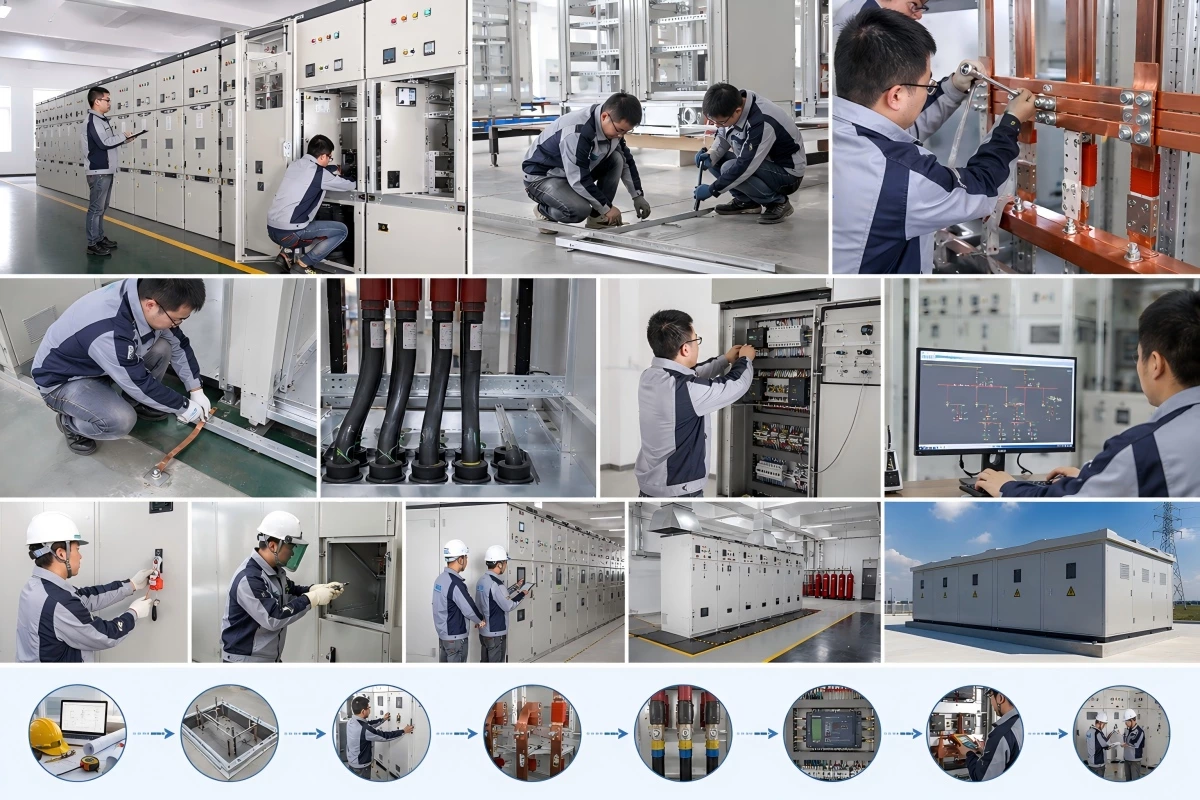
8.High Voltage Switchgear Maintenance and Testing
-
Importance of High Voltage Switchgear Maintenance and Testing
Regular high voltage switchgear maintenance and testing are essential for ensuring long-term operational reliability, electrical safety, and system efficiency.
Because high voltage switchgear operates continuously under high electrical stress, components may gradually deteriorate due to thermal aging, environmental conditions, mechanical wear, and electrical faults. Without proper maintenance, these issues can lead to:
- Equipment failure
- Power outages
- Arc flash incidents
- Reduced insulation performance
- Increased operational costs
Routine maintenance and testing help detect potential problems before major failures occur, significantly improving the reliability of the entire power distribution system.
For utility networks, industrial facilities, and critical infrastructure projects, preventive maintenance is considered a fundamental part of operational risk management.
-
Objectives of Switchgear Maintenance
The primary purpose of maintenance is to ensure that all switchgear components continue operating safely and efficiently throughout their service life.
Key maintenance objectives include:
- Maintaining electrical reliability
- Preventing unexpected failures
- Extending equipment lifespan
- Improving operational safety
- Reducing downtime
- Lowering lifecycle costs
Effective maintenance strategies also help optimize overall system performance and energy efficiency.
-
Types of High Voltage Switchgear Maintenance
Different maintenance strategies are used depending on operating conditions, equipment age, and system criticality.
Preventive Maintenance
Preventive maintenance is performed at scheduled intervals to reduce the risk of unexpected failures.
Typical preventive maintenance activities include:
- Visual inspection
- Cleaning internal components
- Tightening electrical connections
- Lubricating moving parts
- Checking insulation condition
- Verifying protection relay settings
Preventive maintenance is widely used because it helps maintain stable equipment performance and minimizes operational interruptions.
Predictive Maintenance
Predictive maintenance uses monitoring technologies and diagnostic data to predict equipment condition before failure occurs.
Modern predictive maintenance methods include:
- Thermal imaging inspection
- Partial discharge monitoring
- Temperature monitoring
- Online condition monitoring
- Vibration analysis
This approach helps reduce unnecessary maintenance while improving operational efficiency.
Corrective Maintenance
Corrective maintenance is performed after a fault or abnormal condition has been identified.
Typical corrective maintenance activities include:
- Replacing damaged components
- Repairing insulation systems
- Fixing control circuit issues
- Restoring operational functions
Although corrective maintenance is sometimes unavoidable, excessive reliance on reactive repairs can increase downtime and operational risk.
-
Routine Inspection Procedures
Routine inspections are one of the most important parts of high voltage switchgear maintenance.
Regular inspections help identify early signs of equipment deterioration before major problems develop.
| Visual Inspection | Mechanical Inspection | Electrical Inspection |
|---|---|---|
| Visual inspection should focus on: | Mechanical components such as circuit breakers and disconnect switches should be checked for: | Electrical inspections verify the condition of: |
| Signs of overheating | Smooth operation | Busbar connections |
| Corrosion or moisture | Proper alignment | Cable terminations |
| Loose connections | Mechanical wear | Grounding systems |
| Dust accumulation | Lubrication condition | Protection relay circuits |
| Mechanical damage | ||
| Even minor abnormalities may indicate larger underlying issues within the switchgear system. | Mechanical failure can directly affect switching reliability and operational safety. | Loose electrical connections can generate excessive heat and increase the risk of failure. |
-
High Voltage Switchgear Testing Methods
Testing is critical for verifying switchgear performance and identifying hidden defects.
-
Insulation Resistance Testing
Insulation resistance testing evaluates the condition of insulation materials within the switchgear system.
Low insulation resistance may indicate:
- Moisture contamination
- Insulation aging
- Surface tracking
- Internal deterioration
Reliable insulation performance is essential for preventing electrical breakdown.
-
Contact Resistance Testing
Contact resistance testing measures the resistance across electrical contact points such as busbars and circuit breaker terminals.
High resistance values may result in:
- Overheating
- Power loss
- Reduced operational reliability
This test is important for ensuring efficient current transmission.
-
Circuit Breaker Timing Test
Circuit breaker timing tests verify the opening and closing performance of the breaker mechanism.
Testing helps ensure:
- Fast fault interruption
- Synchronized pole operation
- Stable switching performance
Accurate breaker timing is essential for system protection coordination.
-
Protection Relay Testing
Protection relay testing confirms that the relay system responds correctly to fault conditions.
This includes verification of:
- Trip settings
- Communication functions
- Alarm signals
- Protection coordination logic
Reliable relay operation is critical for preventing large-scale electrical failures.
-
Partial Discharge Testing
Partial discharge testing detects localized insulation defects before complete insulation failure occurs.
This test is particularly important for:
- GIS systems
- Aging switchgear equipment
- High-humidity environments
Early detection of partial discharge significantly reduces long-term operational risk.
-
Maintenance of Circuit Breaker Systems
The circuit breaker system requires special attention because it performs the most critical switching operations within the switchgear assembly.
Maintenance activities typically include:
- Contact inspection
- Arc chamber cleaning
- Mechanical lubrication
- Operating mechanism testing
- Spring charging system inspection
For SF₆ circuit breakers, gas pressure and gas leakage monitoring are also essential maintenance requirements.
-
Importance of Thermal Monitoring
Thermal issues are among the most common causes of switchgear failure.
Excessive temperature rise may result from:
- Loose electrical connections
- Overloaded conductors
- Poor ventilation
- Contact deterioration
Modern maintenance programs increasingly use thermal imaging systems to identify overheating points before serious damage occurs.
Thermal monitoring significantly improves preventive maintenance effectiveness.
-
Digital Maintenance and Intelligent Monitoring
Modern intelligent switchgear systems support advanced maintenance technologies such as:
- Remote monitoring systems
- Real-time diagnostics
- Condition monitoring sensors
- Predictive maintenance platforms
These technologies provide several advantages:
- Faster fault detection
- Reduced manual inspection workload
- Improved maintenance planning
- Lower operational costs
Digital monitoring is becoming an increasingly important part of modern smart grid integration and utility infrastructure management.
-
Common Maintenance Challenges
Several challenges commonly affect high voltage switchgear maintenance programs:
Aging Infrastructure
Older switchgear systems may experience insulation degradation and reduced mechanical reliability.
Harsh Operating Environments
Dust, humidity, vibration, and corrosive atmospheres can accelerate equipment deterioration.
Limited Maintenance Windows
Critical facilities often operate continuously, making maintenance scheduling difficult.
Technical Skill Requirements
High voltage maintenance requires experienced technical personnel and strict safety procedures.
Proper maintenance planning is therefore essential for minimizing operational risks.
-
Safety Requirements During Maintenance
Safety is the highest priority during high voltage switchgear maintenance activities.
-
Electrical Isolation
All equipment must be completely isolated and verified before maintenance work begins.
-
Lockout and Tagout Procedures
Strict lockout procedures help prevent accidental energization during maintenance.
-
Personal Protective Equipment
Maintenance personnel should use approprz`iate electrical safety equipment, including:
- Arc flash protection clothing
- Insulated gloves
- Safety helmets
- Insulated tools
Proper safety management significantly reduces accident risks during maintenance operations.
-
Long-Term Value of Effective Maintenance
A well-structured maintenance program provides major operational and economic benefits, including:
- Extended equipment lifespan
- Improved operational reliability
- Reduced outage frequency
- Lower repair costs
- Better energy efficiency
In practical industrial and infrastructure applications, preventive maintenance and intelligent monitoring systems have significantly improved power distribution reliability while reducing operational downtime and lifecycle costs.
-
Summary of High Voltage Switchgear Maintenance and Testing
High voltage switchgear maintenance and testing are essential for ensuring safe, stable, and efficient operation throughout the equipment lifecycle.
Through preventive maintenance, routine inspection, advanced testing, and intelligent monitoring technologies, operators can significantly improve reliability, reduce operational risks, and extend equipment service life.
As modern power systems continue evolving toward digitalization and smart infrastructure, maintenance strategies will become increasingly data-driven and predictive.
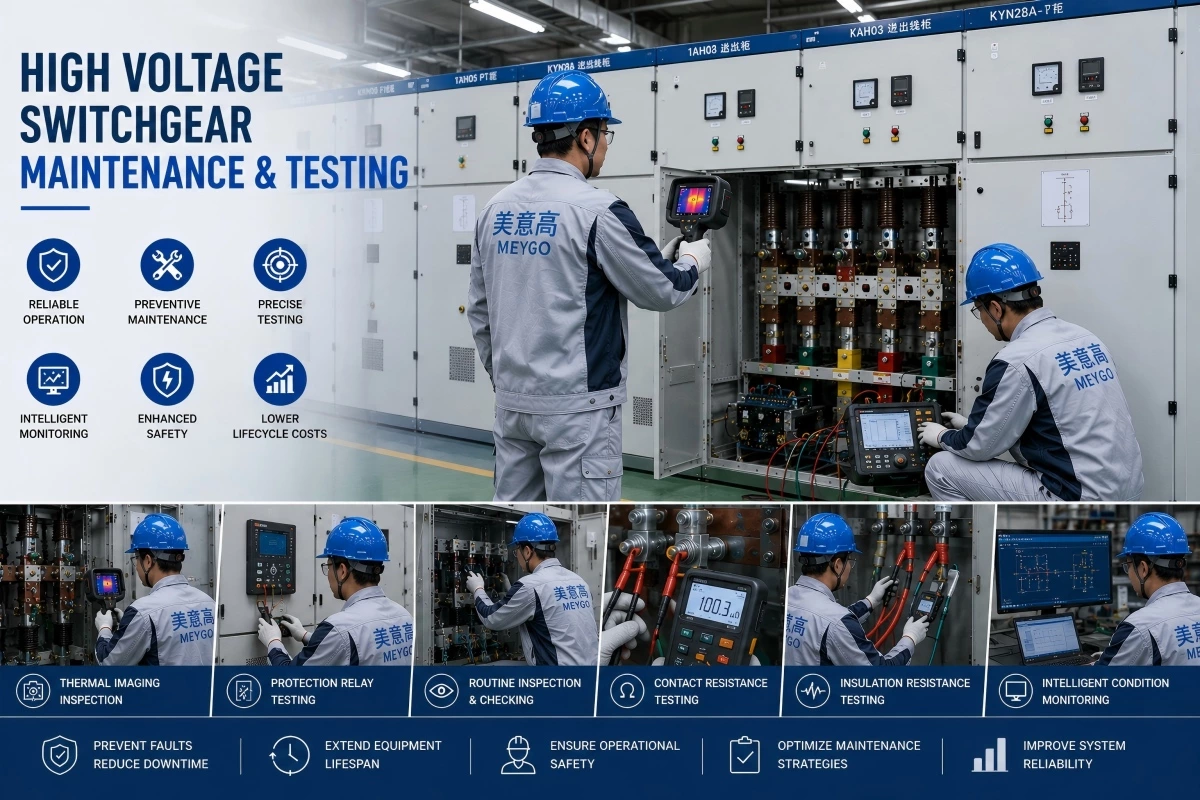
9.High Voltage Switchgear Price and Cost Analysis
-
Understanding High Voltage Switchgear Pricing
The price of high voltage switchgear varies significantly depending on technical specifications, project requirements, equipment type, and engineering complexity.
Unlike standardized consumer products, high voltage switchgear is typically customized according to the electrical system design, installation environment, and operational requirements of each project.
As a result, switchgear pricing is influenced by multiple factors rather than a single fixed cost.
For EPC contractors, utility companies, and industrial buyers, understanding the structure of switchgear pricing is essential for:
- Budget planning
- Equipment selection
- Lifecycle cost optimization
- Procurement decision-making
A lower initial purchase price does not always mean lower long-term operational cost. In many projects, reliability, maintenance requirements, and service life have a greater impact on total investment value.
-
Main Factors Affecting High Voltage Switchgear Price
-
Voltage Rating
-
Voltage level is one of the most important factors affecting switchgear cost.
Higher voltage systems require:
- Stronger insulation performance
- More advanced fault interruption capability
- Larger electrical clearance distances
- Higher engineering standards
As voltage ratings increase, manufacturing complexity and testing requirements also increase significantly.
For this reason, ultra-high voltage switchgear systems are considerably more expensive than medium-voltage solutions.
-
Switchgear Type
Different switchgear technologies have different manufacturing and engineering costs.
| AIS (Air Insulated Switchgear) | GIS (Gas Insulated Switchgear) | Hybrid Switchgear |
|---|---|---|
| AIS systems generally have: | GIS systems usually have: | Hybrid systems provide a balance between AIS and GIS technologies. |
|
|
Their pricing typically falls between the two solutions, offering moderate space savings and balanced performance. |
| AIS is often selected for projects where installation space is sufficient and cost control is a priority. | Although GIS requires higher investment, it often provides better long-term reliability and reduced operational costs. |
-
Rated Current and Breaking Capacity
Switchgear systems designed for high current loads and high short-circuit interruption capability require:
- Larger conductors
- Stronger mechanical structures
- More advanced circuit breaker systems
This increases both material consumption and manufacturing complexity.
Projects with high fault current requirements therefore typically involve higher equipment costs.
-
Material Quality and Component Brand
The quality of materials and electrical components significantly affects pricing.
High-quality switchgear often uses:
- Premium copper busbars
- High-performance insulation materials
- International-brand protection relays
- Advanced circuit breaker systems
Well-known component brands may increase initial cost but often improve long-term operational reliability and reduce maintenance frequency.
-
Customization Requirements
Customized switchgear solutions usually involve higher engineering and manufacturing costs.
Customization may include:
- Special enclosure dimensions
- Intelligent monitoring systems
- Environmental protection upgrades
- Arc-resistant structures
- Remote communication functions
Complex project specifications typically require more engineering work, resulting in higher pricing.
-
Installation and Engineering Costs
The total cost of high voltage switchgear extends beyond equipment purchase price alone.
Installation and engineering services often represent a significant portion of project investment.
Civil Construction Cost
Switchgear installation may require:
- Concrete foundations
- Cable trenches
- Control rooms
- Ventilation systems
GIS systems generally reduce building space requirements, which may lower civil construction costs in urban projects.
Electrical Installation Cost
Installation expenses include:
- Cable connection work
- Grounding system installation
- Busbar assembly
- Protection relay wiring
- System commissioning
The complexity of the installation directly affects labor and project scheduling costs.
Transportation and Logistics
Transportation costs depend on:
- Equipment dimensions
- Shipping distance
- Packaging requirements
- Export destination
For international EPC projects, logistics planning can significantly affect overall procurement cost.
In overseas infrastructure projects, integrated manufacturing and logistics coordination often helps reduce delivery risks and improve project efficiency.
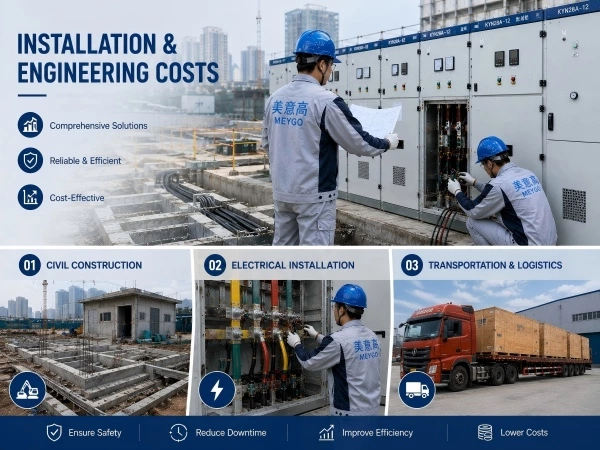
Transportation and Logistics
Transportation costs depend on:
- Equipment dimensions
- Shipping distance
- Packaging requirements
- Export destination
For international EPC projects, logistics planning can significantly affect overall procurement cost.
In overseas infrastructure projects, integrated manufacturing and logistics coordination often helps reduce delivery risks and improve project efficiency.
-
Lifecycle Cost Analysis
When evaluating high voltage switchgear price, buyers should consider not only initial investment but also long-term lifecycle cost.
Lifecycle cost analysis includes:
- Purchase cost
- Installation cost
- Maintenance expenses
- Energy efficiency
- Downtime risk
- Equipment lifespan
In many cases, equipment with higher initial investment provides lower long-term operational cost due to improved reliability and reduced maintenance frequency.
Maintenance Cost
Maintenance requirements vary depending on switchgear type and operating environment.
AIS systems may require more frequent inspection and cleaning, while GIS systems generally offer lower maintenance frequency.
Intelligent monitoring technologies can further reduce maintenance workload and operational downtime.
Operational Reliability Cost
Unexpected electrical failures can cause:
- Production shutdowns
- Power outages
- Equipment damage
- Financial losses
Reliable switchgear systems help minimize these risks, improving overall operational efficiency.
Energy Efficiency
Efficient switchgear design reduces:
- Power loss
- Heat generation
- Operational energy consumption
Over long operating periods, energy efficiency improvements can create significant economic value.
-
Cost Differences by Application Scenario
Switchgear pricing also varies depending on project application and industry requirements.
-
Utility Substations
Utility projects often prioritize:
- High reliability
- Long service life
- Grid stability
These systems usually involve higher engineering standards and larger equipment capacity.
-
Industrial Facilities
Industrial projects may require:
- Compact layouts
- Harsh-environment protection
- Fast installation schedules
Customization requirements can increase engineering costs.
-
Renewable Energy Projects
Renewable energy systems often require:
- Intelligent monitoring integration
- Flexible grid connection capability
- Outdoor environmental protection
As renewable infrastructure expands, demand for highly efficient and compact switchgear solutions continues to increase.
-
How to Optimize High Voltage Switchgear Procurement Cost
Effective procurement strategies can significantly improve project cost efficiency.
| Selecting Appropriate Technical Specifications | Balancing Initial Cost and Long-Term Value | Choosing Experienced Manufacturers |
|---|---|---|
| Oversized equipment increases unnecessary investment, while undersized equipment creates operational risks. | Buyers should evaluate: | Experienced manufacturers can provide: |
|
|
|
| Proper specification matching is essential for cost optimization. | Focusing only on initial purchase price may increase long-term operational costs. | Strong supplier capability often improves overall project execution efficiency. |
-
Market Trends Affecting Switchgear Pricing
Several global trends are influencing high voltage switchgear costs:
- Rising copper and steel prices
- Increasing demand for renewable energy infrastructure
- Expansion of smart grid projects
- Growth of digital switchgear technologies
- Environmental regulations related to SF₆ gas usage
These factors continue affecting manufacturing costs and market pricing worldwide.
-
Practical Value of Cost Analysis
Comprehensive cost analysis helps project owners and procurement teams make better investment decisions.
A well-optimized switchgear solution provides:
- Stable long-term operation
- Lower maintenance risk
- Improved project efficiency
- Better return on investment
In practical engineering projects, integrated power distribution solutions with optimized equipment selection and lifecycle management have significantly improved cost efficiency and operational reliability across industrial and infrastructure applications.
10.High Voltage vs Medium Voltage Switchgear
-
Why the Difference Between High Voltage and Medium Voltage Matters
In modern power systems, selecting the correct voltage class is essential for ensuring efficient electrical transmission, operational stability, and project cost control.
Although both high voltage switchgear and medium voltage switchgear are used for switching and protection, they are designed for completely different stages of the electrical network.
The difference is not simply about voltage level. It also affects:
- Transmission distance
- Power handling capability
- Infrastructure scale
- Protection strategy
- System investment
Understanding these distinctions helps engineers and project owners optimize system performance while avoiding unnecessary engineering complexity.
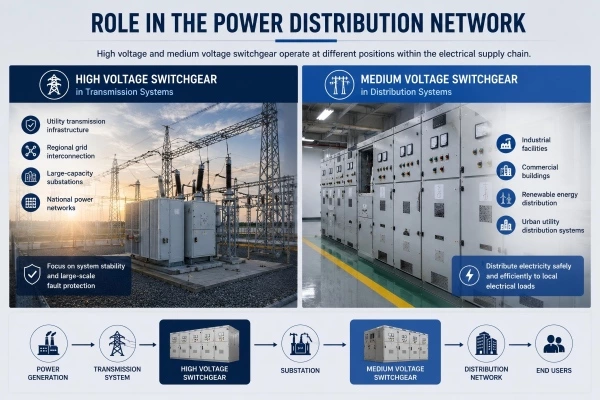
Role in the Power Distribution Network
High voltage and medium voltage switchgear operate at different positions within the electrical supply chain.
H4: High Voltage Switchgear in Transmission Systems
High voltage switchgear is mainly used in bulk power transmission systems where electricity must travel long distances with minimal energy loss.
Its primary role is to support:
- Utility transmission infrastructure
- Regional grid interconnection
- Large-capacity substations
- National power networks
Because transmission systems operate under extremely high electrical loads, high voltage switchgear focuses heavily on system stability and large-scale fault protection.
Medium Voltage Switchgear in Distribution Systems
Medium voltage switchgear mainly operates in local distribution networks closer to end users.
It is commonly applied in:
- Industrial facilities
- Commercial buildings
- Renewable energy distribution
- Urban utility distribution systems
-
Transmission Efficiency Differences
One of the main reasons for using high voltage systems is transmission efficiency.
Electricity transmitted at higher voltage levels experiences lower current flow for the same power capacity. This significantly reduces transmission losses over long distances.
As a result:
- High voltage systems are suitable for long-distance power transmission
- Medium voltage systems are better suited for regional and facility-level distribution
This difference directly affects infrastructure planning and electrical network architecture.
-
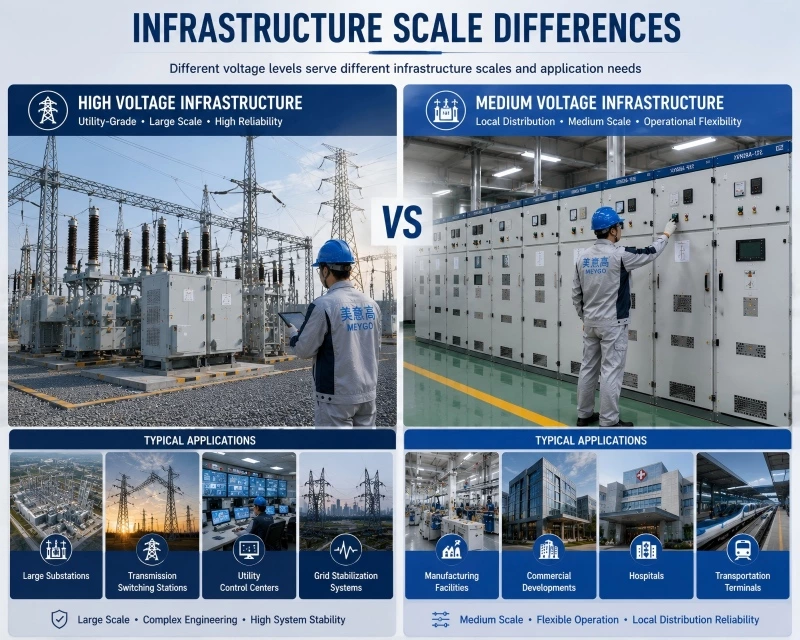
Infrastructure Scale Differences
High Voltage Infrastructure
High voltage switchgear is generally installed in large-scale infrastructure projects involving utility-grade electrical systems.
These projects often require:
- Large substations
- Transmission switching stations
- Utility control centers
- Grid stabilization systems
The engineering scale is usually much larger and more complex.
Medium Voltage Infrastructure
Medium voltage systems are more commonly used in localized infrastructure projects with moderate power demand.
Examples include:
- Manufacturing facilities
- Commercial developments
- Hospitals
- Transportation terminals
These systems usually focus on operational flexibility and local distribution reliability.
-
Operational Complexity Comparison
High voltage systems involve much higher operational complexity compared to medium voltage systems.
High Voltage Operational Characteristics
High voltage switchgear requires:
- Advanced protection coordination
- Precise insulation management
- High fault interruption capability
- Strict operational control procedures
System failure at transmission level can affect large regions of the electrical grid.
Medium Voltage Operational Characteristics
Medium voltage systems are generally easier to operate and maintain because:
- Fault energy levels are lower
- Equipment structures are simpler
- Installation environments are more accessible
This makes medium voltage systems more practical for local industrial and commercial applications.
-
Installation Environment Differences
The installation environment also differs significantly between the two systems.
-
H4: High Voltage Installation Environment
High voltage switchgear installations typically require:
- Large safety clearances
- Specialized substations
- Enhanced grounding systems
- High-level electrical isolation
These requirements increase infrastructure complexity.
-
Medium Voltage Installation Environment
Medium voltage switchgear can often be installed in compact electrical rooms within industrial or commercial buildings.
This provides greater installation flexibility and lower space requirements.
-
Safety Requirement Differences
Electrical safety requirements become increasingly strict as voltage levels rise.
-
High Voltage Safety Requirements
High voltage systems involve:
- Greater arc flash risk
- Higher insulation stress
- Larger fault current energy
As a result, stricter protection measures and operational procedures are necessary.
-
Medium Voltage Safety Requirements
Although medium voltage systems also require strict safety management, operational risks are generally lower compared to high voltage transmission systems.
This affects both maintenance procedures and engineering design complexity.
-
System Expansion and Scalability
-
High Voltage System Expansion
-
High voltage infrastructure is often designed for long-term grid expansion and future load growth.
Projects usually involve:
- Large investment cycles
- Utility planning requirements
- Multi-decade operational targets
Expansion planning is therefore a major engineering consideration.
-
Medium Voltage System Expansion
Medium voltage systems are generally easier and faster to expand within industrial or commercial facilities.
Their modular structure allows more flexible upgrades as operational demand changes.
-
Economic Considerations
The economic structure of high voltage and medium voltage systems differs significantly.
-
High Voltage Economic Focus
High voltage systems prioritize:
- Transmission efficiency
- Grid reliability
- Long-term infrastructure stability
Initial investment is usually much higher, but these systems support large-scale power delivery.
-
Medium Voltage Economic Focus
Medium voltage systems focus more on:
- Installation flexibility
- Cost-effective local distribution
- Operational practicality
Their lower infrastructure complexity often reduces project implementation cost.
-
Engineering Selection Strategy
Choosing between high voltage and medium voltage switchgear depends on overall system objectives rather than voltage alone.
Engineers typically evaluate:
- Power transmission distance
- Load demand
- Infrastructure scale
- Expansion requirements
- Operational reliability goals
Correct system selection helps optimize both technical performance and long-term investment value.
In large industrial and utility projects, coordinated integration between high voltage transmission systems and medium voltage distribution networks is essential for maintaining efficient and stable power supply.
-
Summary of High Voltage vs Medium Voltage Switchgear
High voltage and medium voltage switchgear serve different but interconnected roles within modern electrical infrastructure.
High voltage systems focus on large-scale power transmission and utility grid stability, while medium voltage systems support localized power distribution and operational flexibility.
Understanding the differences in transmission role, infrastructure scale, operational complexity, safety requirements, and economic objectives is essential for selecting the most effective switchgear solution for each application scenario.
11.High Voltage Switchgear Safety and Protection
Importance of Safety in High Voltage Switchgear Systems
Safety is one of the most critical aspects of high voltage switchgear operation.
Because high voltage systems handle extremely large electrical energy, any operational failure can lead to severe equipment damage, system outages, or personal injury. For this reason, modern switchgear systems are engineered with multiple layers of electrical protection and safety control mechanisms.
The primary objectives of switchgear safety design include:
- Protecting personnel from electrical hazards
- Preventing equipment damage
- Maintaining system stability
- Minimizing outage impact
- Reducing operational risk
As modern power systems become more complex, safety and protection engineering play an increasingly important role in maintaining reliable electrical infrastructure.
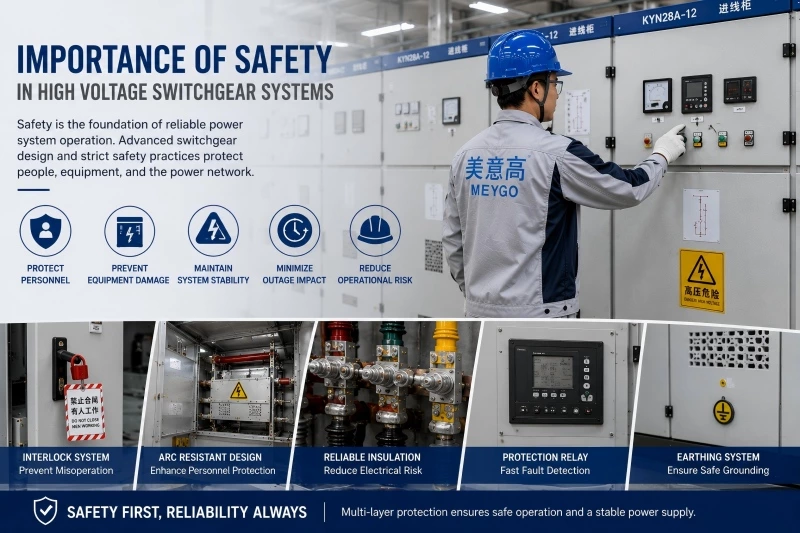
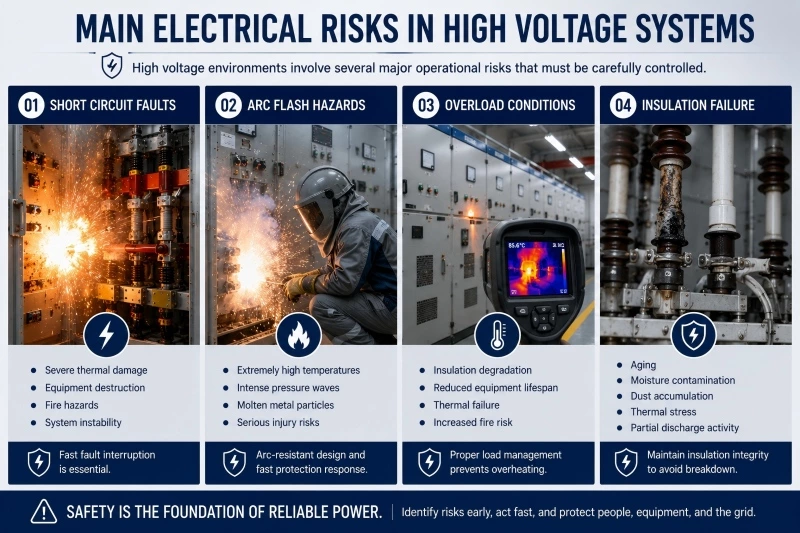
Main Electrical Risks in High Voltage Systems
High voltage environments involve several major operational risks that must be carefully controlled.
-
Short Circuit Faults
Short circuits are among the most dangerous electrical faults in power systems.
When conductors unintentionally contact each other or ground, extremely high fault current is generated within milliseconds.
This can cause:
- Severe thermal damage
- Equipment destruction
- Fire hazards
- System instability
Fast fault interruption is therefore essential for protecting both equipment and the electrical network.
-
Arc Flash Hazards
Arc flash incidents occur when electrical current passes through ionized air between conductors.
Arc flashes can generate:
- Extremely high temperatures
- Intense pressure waves
- Molten metal particles
- Serious injury risks
In high voltage systems, arc flash energy levels can be extremely destructive.
Modern switchgear designs therefore focus heavily on arc-resistant structures and rapid protection response capability.
-
Overload Conditions
Continuous operation above rated current capacity can lead to overheating of conductors, insulation systems, and electrical contacts.
Long-term overload conditions may result in:
- Insulation degradation
- Reduced equipment lifespan
- Thermal failure
- Increased fire risk
Proper load management and protection coordination are necessary to prevent overload damage.
-
Insulation Failure
Insulation systems are critical for separating energized conductors from grounded structures.
Insulation deterioration may be caused by:
- Aging
- Moisture contamination
- Dust accumulation
- Thermal stress
- Partial discharge activity
Insulation failure can result in electrical breakdown and severe operational faults.
Core Protection Functions of High Voltage Switchgear
Modern high voltage switchgear protection systems are designed to identify abnormal conditions and isolate faults before they escalate.
-
Fault Detection
Protection relays continuously monitor electrical conditions such as:
- Current
- Voltage
- Frequency
- Ground fault conditions
When abnormal operating conditions are detected, the system initiates protective actions automatically.
-
Fault Isolation
After a fault is detected, the switchgear isolates the affected section from the rest of the electrical network.
This prevents the fault from spreading and helps maintain operation in unaffected areas.
Selective fault isolation is especially important in large utility and industrial power systems.
-
Circuit Interruption
The circuit breaker system interrupts fault current rapidly to minimize thermal and mechanical damage.
Fast interruption capability is one of the most important safety features of high voltage switchgear.
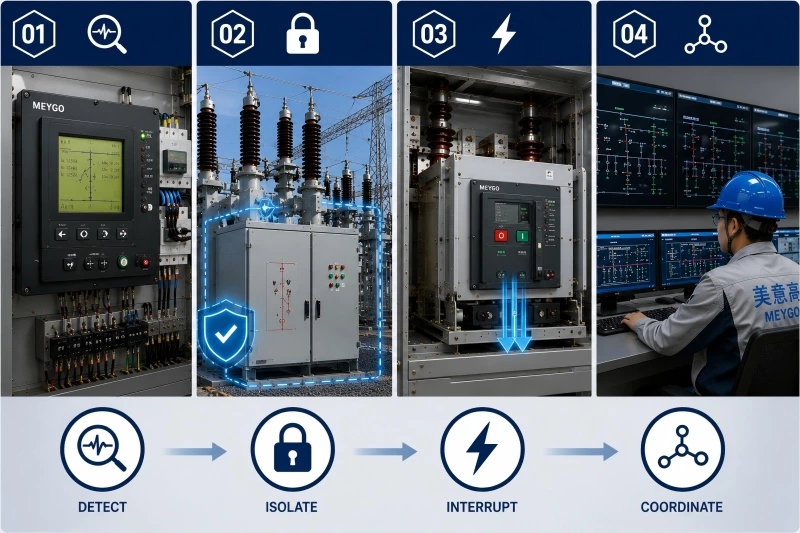
-
System Coordination
Protection systems must coordinate properly to ensure that only the faulty section is disconnected.
Poor coordination may cause unnecessary outages and reduce overall system stability.
Protection Relay Systems
Protection relays act as the intelligent control center of switchgear safety systems.
Modern digital protection relays provide advanced protection functions including:
- Overcurrent protection
- Differential protection
- Distance protection
- Ground fault protection
- Busbar protection
These systems significantly improve fault detection accuracy and operational reliability.
Digital relay systems also support:
- Event recording
- Remote communication
- Real-time diagnostics
- Automated fault analysis
Intelligent relay technology is becoming increasingly important in smart grid infrastructure.
Arc Protection Technologies
Arc fault protection is a major focus in modern high voltage switchgear engineering.
-
Internal Arc Resistant Design
Modern switchgear systems often include internal arc-resistant structures designed to:
- Redirect pressure safely
- Contain arc energy
- Protect operating personnel
- Minimize equipment damage
This significantly improves operational safety during severe fault conditions.
-
Arc Detection Systems
Advanced arc detection systems use:
- Optical sensors
- Current monitoring
- Pressure detection technologies
These systems identify arc faults extremely quickly and trigger immediate circuit interruption.
Rapid arc protection greatly reduces fault impact and improves personnel safety.
Grounding and Electrical Safety Protection
The grounding system is one of the most important safety components in high voltage switchgear installations.
An effective grounding system helps:
- Prevent electric shock
- Dissipate fault current safely
- Stabilize system voltage
- Reduce arc fault risk
Poor grounding quality can significantly increase operational hazards.
For this reason, grounding design and maintenance are essential parts of switchgear safety engineering.
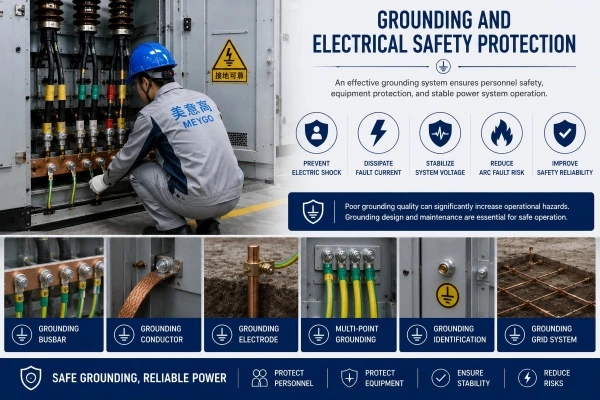
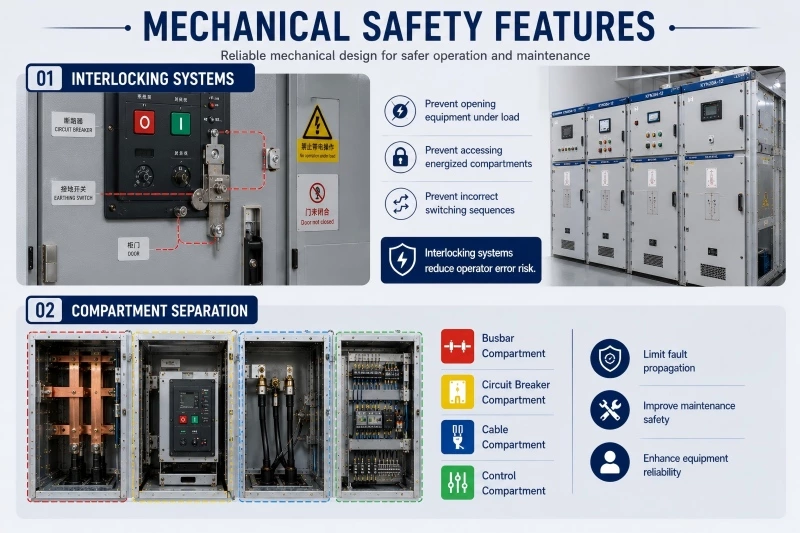
Mechanical Safety Features
In addition to electrical protection, modern switchgear systems also incorporate mechanical safety mechanisms.
-
Interlocking Systems
Mechanical and electrical interlocks prevent unsafe operating actions such as:
- Opening equipment under load
- Accessing energized compartments
- Incorrect switching sequences
Interlocking systems significantly reduce the risk of operator error.
-
Compartment Separation
Modern switchgear structures typically separate:
- Busbar sections
- Circuit breaker compartments
- Cable compartments
- Control compartments
This compartmentalized design limits fault propagation and improves maintenance safety.
Safety Procedures During Operation and Maintenance
Operational safety depends not only on equipment design but also on proper working procedures.
-
Lockout and Tagout Procedures
Before maintenance work begins, all electrical sources must be isolated and secured to prevent accidental energization.
Strict lockout procedures are essential for personnel safety.
-
Personal Protective Equipment (PPE)
Maintenance personnel should use appropriate protective equipment, including:
- Arc flash protective clothing
- Insulated gloves
- Safety helmets
- Face shields
- Insulated tools
PPE significantly reduces injury risk during high voltage operations.
-
Safety Training
- Electrical safety procedures
- Emergency response
- Equipment operation
- Fault handling methods
-
Technical personnel must receive proper training in:
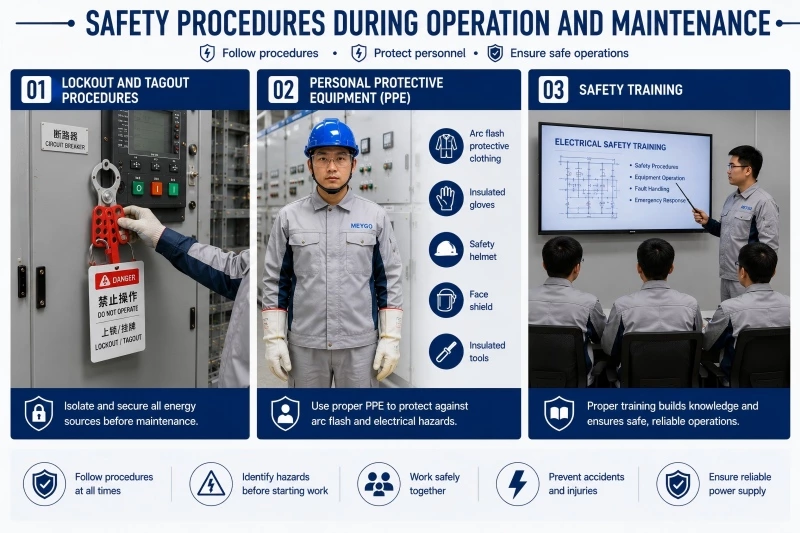
Intelligent Safety Technologies in Modern Switchgear
Modern intelligent switchgear systems increasingly integrate advanced safety technologies such as:
- Real-time condition monitoring
- Thermal monitoring systems
- Predictive fault analysis
- Remote operation capability
- Automated alarm systems
These technologies improve:
- Fault response speed
- Maintenance planning
- Operational visibility
- System reliability
Digital safety integration is becoming a key part of next-generation smart grid infrastructure.
Importance of Safety Engineering in Large Projects
Large infrastructure and industrial projects require extremely high levels of electrical safety and operational reliability.
Effective safety engineering helps:
- Reduce operational downtime
- Prevent catastrophic failures
- Protect critical infrastructure
- Improve long-term system stability
In practical utility and industrial applications, advanced protection coordination, grounding systems, and intelligent monitoring technologies have significantly improved operational safety and reduced electrical risks across modern power distribution projects.
12.Future Trends: Digital and Smart Switchgear
-
Transition from Conventional Switchgear to Intelligent Infrastructure
The future development of high voltage switchgear is no longer focused only on electrical protection and switching performance. Modern power systems are rapidly evolving toward intelligent infrastructure that combines automation, digital communication, and data-driven operational management.
As global power networks become more interconnected and complex, conventional switchgear systems are gradually being replaced by intelligent platforms capable of supporting real-time decision-making and adaptive system control.
Future switchgear solutions are expected to become:
- More autonomous
- More connected
- More energy-efficient
- More environmentally sustainable
- More integrated with digital utility infrastructure
This transition is reshaping how substations, industrial facilities, and utility grids are designed and operated.
-
Fully Digital Substations
One of the most significant trends in the power industry is the development of fully digital substations.
Traditional substations rely heavily on physical wiring and manual operation. Future substations increasingly use digital communication systems that allow electrical data to be transmitted electronically between intelligent devices.
This transformation provides several advantages:
- Faster system communication
- Reduced cable complexity
- Improved operational accuracy
- Easier system expansion
- Lower infrastructure maintenance requirements
Digital substations also improve the integration of protection, monitoring, and automation systems within a unified operational platform.
-
Artificial Intelligence in Switchgear Systems
Artificial intelligence (AI) is expected to play an increasingly important role in future switchgear operation and asset management.
AI-based systems can analyze large amounts of operational data to identify abnormal patterns and optimize system performance automatically.
Future AI applications may include:
- Intelligent fault prediction
- Automated operational optimization
- Self-diagnosis systems
- Dynamic load balancing
- Risk assessment analysis
By reducing reliance on manual analysis, AI technologies can significantly improve operational efficiency and reduce unexpected system failures.
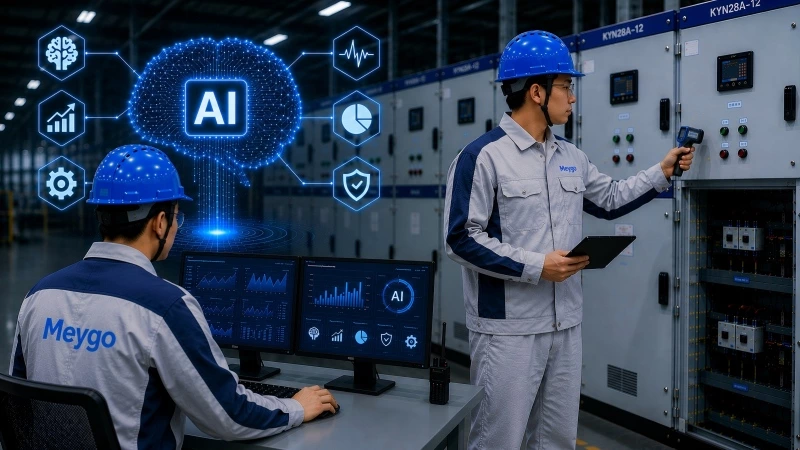
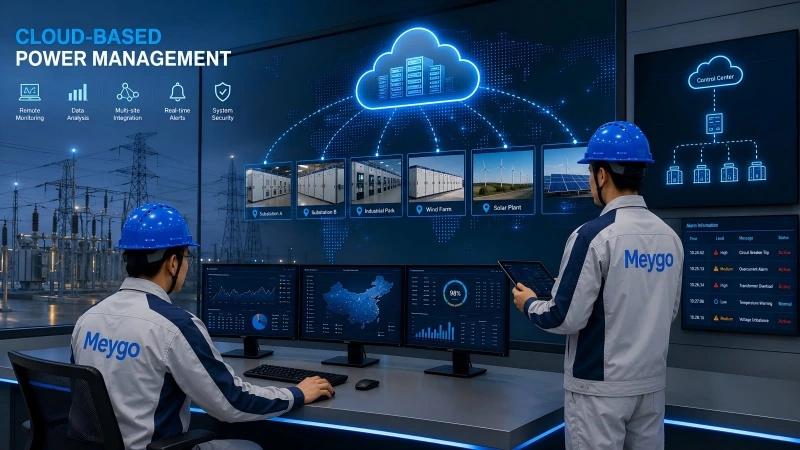
-
Cloud-Based Power Management
Cloud computing is becoming an important technology in modern electrical infrastructure management.
Future smart switchgear systems will increasingly connect to cloud-based platforms that allow centralized monitoring and asset management across multiple substations and facilities.
Cloud-based management systems support:
- Remote asset supervision
- Centralized operational analysis
- Multi-site data integration
- Long-term performance tracking
- Real-time alarm management
This trend is especially important for large utility companies and international infrastructure operators managing geographically distributed power systems.
-
Expansion of Eco-Friendly Switchgear Technologies
Environmental sustainability is becoming a major driving force in switchgear development.
Traditional insulation technologies using SF₆ gas face increasing environmental pressure because of their greenhouse gas impact. As a result, manufacturers are accelerating the development of environmentally friendly alternatives.
Future eco-efficient switchgear technologies may include:
- SF₆-free insulation systems
- Clean air insulation technology
- Solid dielectric insulation
- Low-carbon manufacturing materials
The shift toward sustainable electrical infrastructure is expected to become one of the most important trends in future power distribution engineering.
-
Greater Integration with Renewable Energy Networks
Future power systems will rely more heavily on renewable energy sources such as solar, wind, and energy storage systems.
Unlike conventional centralized power generation, renewable energy introduces decentralized and highly variable power flow conditions.
Future high voltage switchgear systems must therefore support:
- Faster load adaptation
- Flexible grid balancing
- Bidirectional power flow management
- Decentralized energy coordination
This will require more intelligent operational control and faster communication between switchgear systems and utility networks.
-
Autonomous Operation and Self-Healing Grids
One of the long-term goals of smart grid development is the creation of self-healing electrical networks.
Future intelligent switchgear systems may automatically:
- Detect faults
- Isolate damaged sections
- Reconfigure power flow
- Restore service to unaffected areas
without requiring manual operator intervention.
This autonomous capability could significantly reduce outage duration and improve grid resilience during extreme operating conditions.
-
Data-Driven Asset Lifecycle Management
Future switchgear systems will increasingly use operational data to optimize equipment lifecycle management.
Instead of relying solely on scheduled maintenance intervals, future systems will continuously evaluate equipment condition based on real operating data.
This allows operators to:
- Extend equipment service life
- Reduce unnecessary maintenance
- Improve replacement planning
- Optimize operational investment
Data-driven asset management is expected to become a core strategy for utility and industrial infrastructure operators.
-
Challenges Facing Future Smart Switchgear Development
Although intelligent switchgear technologies offer major advantages, future development also faces several important challenges.
-
Increasing System Complexity
Advanced automation and digital integration significantly increase engineering complexity.
Future systems will require more sophisticated design, operation, and maintenance capabilities.
-
Cybersecurity Requirements
As switchgear systems become increasingly connected, protection against cyber threats becomes more critical.
Future infrastructure must ensure secure communication and prevent unauthorized system access.
-
Skilled Technical Workforce
The operation and maintenance of intelligent switchgear systems require highly trained technical personnel with expertise in both electrical engineering and digital technologies.
The shortage of skilled professionals may become a major challenge for future infrastructure development.
-
Investment and Upgrade Pressure
Many existing substations and industrial facilities still use traditional switchgear systems.
Upgrading these systems to intelligent digital platforms may require substantial investment and infrastructure modification.
-
Long-Term Outlook for High Voltage Switchgear
The long-term future of high voltage switchgear will focus on achieving a balance between:
- Reliability
- Sustainability
- Automation
- Digital intelligence
- Operational efficiency
Future systems will no longer function only as protection equipment. They will become intelligent infrastructure platforms capable of supporting modern smart cities, renewable energy integration, and next-generation utility networks.
As electrical infrastructure continues evolving globally, digital and smart switchgear technologies will become one of the key foundations of future energy systems.
In modern utility and industrial projects, intelligent monitoring, digital communication, and automated control technologies are already improving infrastructure efficiency, operational stability, and long-term power management performance.
Conclusion
High voltage switchgear plays a critical role in modern power systems by ensuring safe, stable, and efficient electrical transmission and distribution.
From system design and component structure to installation, maintenance, protection, and future intelligent development, high voltage switchgear continues evolving to meet the growing demands of modern infrastructure, renewable energy integration, and smart grid technology.
As power systems become more digitalized and interconnected, selecting reliable and well-engineered high voltage switchgear solutions will remain essential for achieving long-term operational safety, efficiency, and sustainability.