Industrial Electrical Distribution Solution for Cement Production in Kenya
-
Project Overview
MEYGO provided a power distribution system solution for a cement plant in Kenya, addressing the electrical supply requirements of heavy-duty equipment used in cement production.
The project involved electrical distribution for crushers, ball mills, conveying systems, and other cement production equipment. These industrial loads required a coordinated power distribution solution suitable for the plant's operating conditions.
The project also required consideration of the local industrial environment, including elevated ambient temperatures and dust exposure.
MEYGO's engineering scope began with reviewing the customer's production process and electrical load data. Based on this information, the team developed and optimized the distribution system design, including circuit arrangements, electrical drawings, and protection setting schemes.
Beyond engineering design, MEYGO supplied the required power distribution assemblies and carried out factory inspection and testing before delivery.
The project scope also included technical documentation and engineering support for on-site installation and commissioning.
MEYGO completed the engineering design, distribution equipment supply, factory testing, and technical documentation scope, with technical support provided for installation and commissioning.
Project Information
| Item | Project Details |
|---|---|
| Project Location | Kenya, Africa |
| Industry | Cement Manufacturing |
| Project Type | Heavy-Duty Industrial Power Distribution |
| Application | Cement Production Equipment |
| Main Electrical Loads | Crushers, Ball Mills, Conveyor Systems |
| Operating Characteristics | High-Power Motor Loads, Starting Current, Load Variation |
| Environmental Conditions | High Ambient Temperature, Dust Exposure |
| Engineering Scope | Load Assessment, Distribution System Design and Optimization |
| Electrical Design | System Drawings, Circuit Configuration, Protection Setting Schemes |
| Protection Requirements | Overload and Short-Circuit Protection |
| Equipment Supply | Complete Electrical Distribution Assemblies |
| Factory Verification | Factory Inspection and Electrical Testing |
| Technical Deliverables | Electrical Drawings, Manuals and Supporting Documentation |
| Site Support | Installation and Commissioning Technical Assistance |
| Project Status | Completed |
-
Electrical Power Requirements for Cement Production Equipment
Electrical distribution in a cement plant must accommodate different types of industrial loads operating within the same production process.
For the Kenya project, the main power requirements were associated with crushing, grinding, and material conveying equipment. These systems use high-power motors, but their operating characteristics and electrical demands are not identical.
Understanding these differences was essential for establishing the load requirements, circuit configurations, and power supply arrangements needed for the plant.
-
High-Power Loads in Crushing, Grinding, and Conveying
Cement production involves several mechanical processes with distinct electrical load characteristics.
-
Crushing Equipment
Crushers can experience substantial variations in mechanical load as material enters the crushing chamber. Changes in material size, feed rate, and operating conditions influence motor loading and the electrical demand placed on the supply circuit.
The distribution system therefore needs to accommodate the crusher's rated operating requirements and anticipated load variations.
-
Ball Mills
Ball mills use large motor-driven rotating equipment for grinding operations. Their substantial rotating mass and mechanical operating characteristics must be considered when determining motor starting requirements and the electrical capacity of the associated supply circuit.
For continuous grinding applications, the distribution system must also support sustained motor operation under the expected working load.
-
Conveyor Systems
Conveyors transport material between different stages of production. Individual conveyor motors may have lower power ratings than major crushing or grinding drives, but multiple conveyors can create a significant combined electrical load.
Their operating requirements also depend on factors such as material loading, starting conditions, and the coordination of equipment across the production line.
These differences mean that electrical demand cannot be evaluated solely from the total installed motor capacity. The operating characteristics of each major load must also be considered.
-
Motor Starting and Load Variation Requirements
Motor starting is a significant consideration in industrial power distribution because the electrical demand during acceleration can differ substantially from normal running conditions.
Motor starting requirements depend on motor ratings, driven equipment characteristics, and the selected starting method. For major cement production loads, these requirements must be considered separately from normal operating demand.
The required load information therefore included normal operating demand, motor starting characteristics, and the expected operating sequence of major equipment. These factors formed part of the electrical requirements reviewed for the Kenya project.
The actual starting characteristics depend on the motor ratings, mechanical loads, and selected starting equipment.
The customer-provided load data formed the basis for evaluating these requirements in the project's electrical design.
-
Power Supply Continuity for Cement Production
Cement production relies on the coordinated operation of multiple pieces of equipment. An interruption affecting one major process can also influence upstream or downstream operations.
For example, a conveyor supplying material to a processing machine and the machine itself may have different electrical ratings, yet both are necessary for the intended material flow.
This makes the relationship between individual loads important when defining the distribution system's operating requirements.
The electrical requirements therefore extended beyond individual motor ratings to the operating relationships between connected production equipment. These relationships needed to be considered when establishing the plant's overall power supply requirements.
For the Kenya project, these requirements established the technical basis for developing a coordinated cement plant power distribution system capable of supporting heavy-duty production equipment.
-
Engineering Challenges in Heavy-Duty Cement Plant Distribution
Designing a reliable electrical distribution system for a cement plant requires more than matching the supply capacity to the total connected load.
For the Kenya project, the engineering challenges centered on three factors: electrical disturbances associated with large motor starting, protection coordination across heavy-duty circuits, and the effects of high temperatures and dust on distribution equipment.
These factors had to be evaluated together because they influence equipment selection, system reliability, and the risk of unplanned production interruptions.
-
Managing Motor Starting Current and Electrical Disturbances
The main engineering concern was how starting large motors could affect the wider distribution network.
Starting demand, network impedance, and available supply capacity can influence voltage stability during motor acceleration. A significant voltage drop may affect other equipment connected to the same distribution system.
For the Kenya project, the challenge was to evaluate these interactions while accounting for the expected operating sequence of major production loads.
The design also needed to distinguish permissible motor starting conditions from abnormal electrical conditions to avoid unnecessary protection operation.
Coordinating Protection for High-Power Industrial Loads
A major challenge was coordinating protection for circuits with different operating characteristics and fault conditions.
Overload protection must respond to sustained excessive current without unnecessarily interrupting permissible motor operation. Short-circuit protection must provide suitable fault interruption capability for the prospective fault levels at the relevant circuit locations.
These functions also need to coordinate with upstream and downstream protective devices.
Inadequate coordination can result in unnecessary upstream tripping or insufficient protection of connected equipment.
For the Kenya project, the engineering task was to establish protection requirements that accounted for motor characteristics, circuit conditions, and the overall distribution arrangement.
Electrical Equipment Exposure to Heat and Dust
High ambient temperatures and substantial dust exposure presented additional challenges for electrical equipment used at the cement plant.
Elevated temperatures can reduce the available margin for heat dissipation within enclosed electrical assemblies, affecting component operating temperatures and permissible loading.
Dust exposure creates a different concern: equipment enclosures must provide suitable protection against particle ingress under the expected installation conditions.
These requirements can interact. Increasing enclosure protection may restrict natural ventilation, making thermal management more demanding.
For the Kenya project, the engineering challenge was to account for both environmental protection and internal operating temperatures without compromising the electrical requirements of the distribution system.
-
Cement Plant Power Distribution System Design
MEYGO developed and optimized the electrical distribution design for the Kenya cement plant based on the customer's production process and electrical load data.
The engineering work established how power would be distributed to the major production equipment, how individual circuits would be configured, and how protective devices would be coordinated within the system.
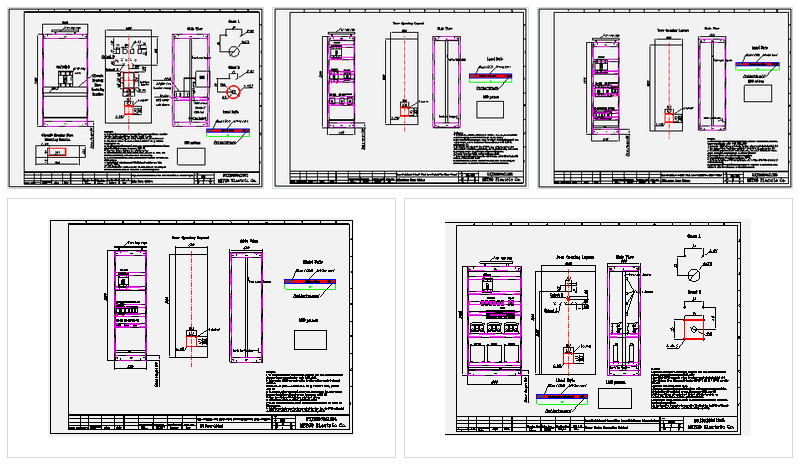
The design deliverables included electrical system drawings, circuit configurations, and protection setting schemes, providing the technical basis for the supply of the required distribution assemblies.
-
Electrical Load Assessment and Distribution Architecture
MEYGO reviewed the customer's electrical load data and production process to establish the distribution requirements for the cement plant.
The assessment considered connected loads, operating demand, and the relationship between major production equipment. This information supported the development of the distribution architecture, including circuit allocation, supply capacity, and connections between main distribution equipment and downstream circuits.
The resulting electrical system drawings provided the technical reference for equipment configuration and project implementation.
-
Circuit Configuration for Crushers, Ball Mills, and Conveyors
Based on the distribution architecture, MEYGO developed the circuit arrangements for crushers, ball mills, conveying systems, and associated production equipment.
The circuit configuration addressed equipment supply requirements, circuit allocation, switching arrangements, and the corresponding protection interfaces.
Each circuit was considered in relation to its connected load and its position within the wider distribution system.
These arrangements were documented in the electrical drawings and provided the basis for the configuration of the supplied distribution assemblies.
-
Overload and Short-Circuit Protection Coordination
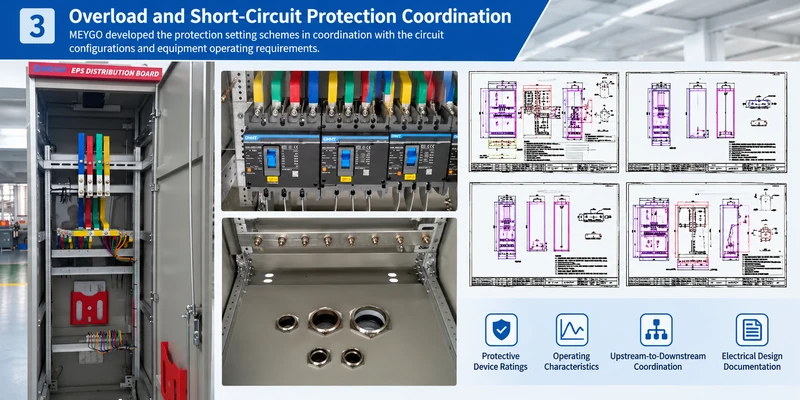
MEYGO developed the protection setting schemes in coordination with the circuit configurations and equipment operating requirements.
The engineering work considered protective device ratings, operating characteristics, and upstream-to-downstream coordination to establish suitable protection arrangements for the connected loads.
The resulting protection schemes formed part of the project's electrical design documentation.
-
Design Considerations for High-Temperature and Dusty Environments
The distribution equipment design also considered the cement plant's high-temperature and dusty operating environment.
MEYGO evaluated enclosure construction, internal equipment arrangements, and the suitability of electrical components for the expected service conditions.
Thermal considerations included internal heat generation, component temperature limits, and the available heat dissipation arrangements. Dust exposure was considered in relation to enclosure protection and equipment accessibility.
These factors were incorporated into the equipment configuration to support operation under the intended industrial conditions.
-
Electrical Distribution Equipment Supplied
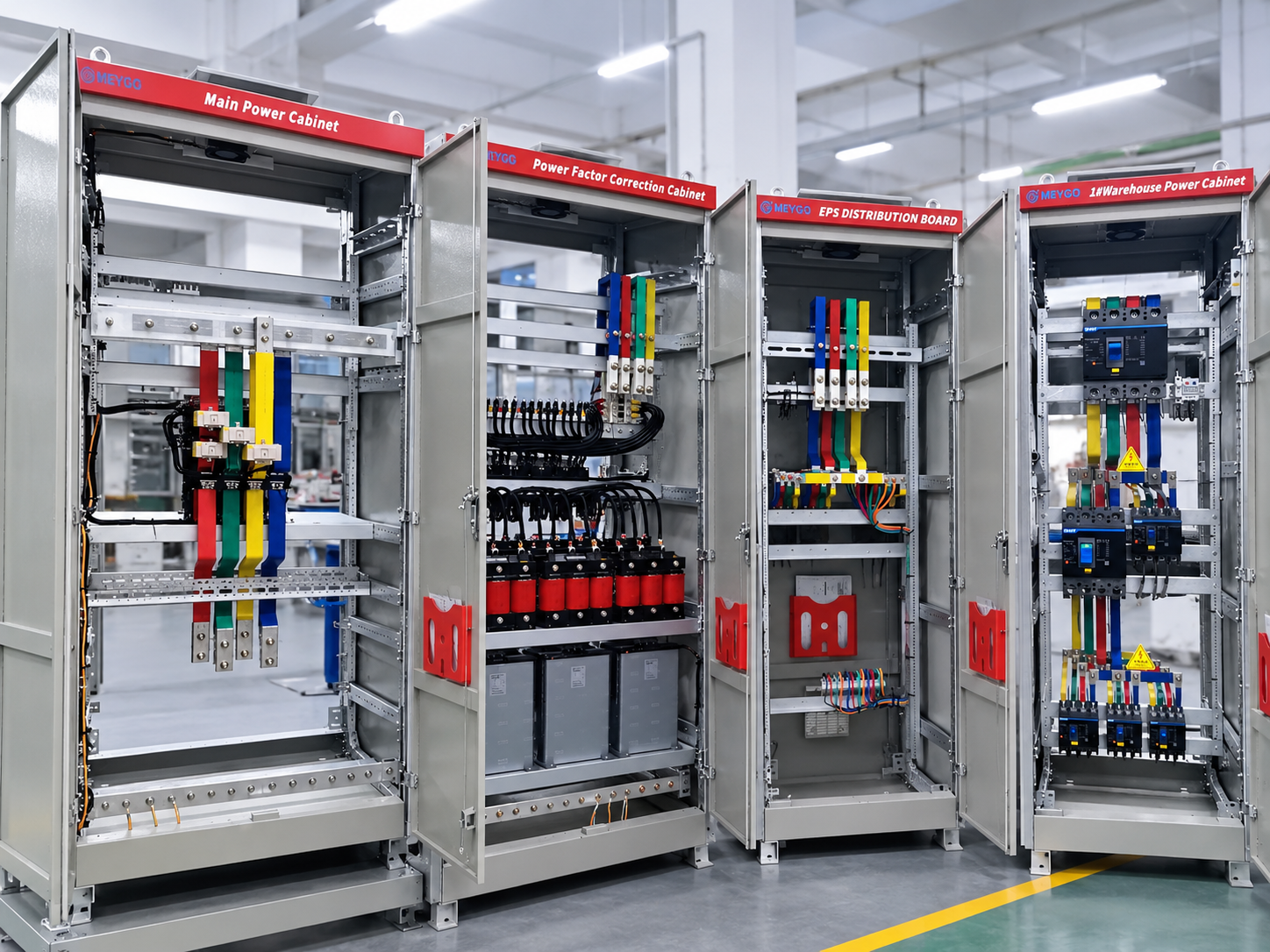
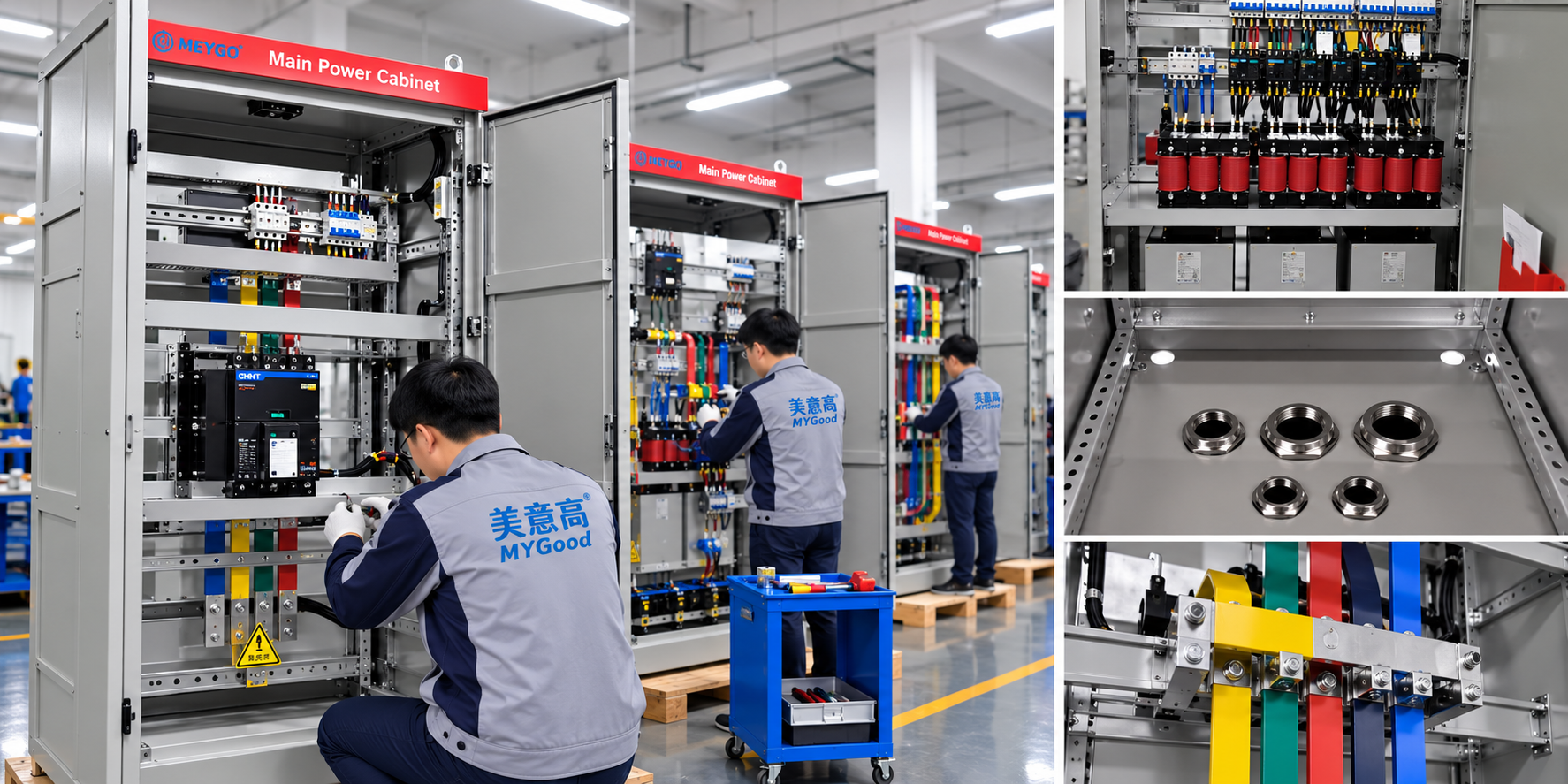
MEYGO supplied the assembled electrical distribution equipment required for the Kenya cement plant, translating the project's engineering design into completed industrial distribution assemblies.
-
Complete Power Distribution Assemblies
The supply scope covered complete cabinet assemblies with the electrical devices, internal connections, and supporting structures required by their designated distribution functions.
Unlike a supply of individual components or empty enclosures, the equipment was manufactured and assembled as integrated electrical units for the project.
-
Equipment Configuration and Circuit Arrangement
The cabinets incorporated the switching, protection, and connection arrangements specified for the relevant circuits.
Component positioning and internal connections were coordinated with the electrical drawings, ensuring that the assemblies could accommodate the required equipment interfaces and remain accessible for installation and maintenance.
-
Manufacturing According to Project Requirements
MEYGO carried out cabinet construction, component installation, internal wiring, and final assembly within its manufacturing scope.
The completed equipment was prepared for factory verification before delivery, supporting the transition from engineered electrical designs to finished distribution assemblies for the Kenya cement plant.
-
Factory Testing and Technical Documentation
Before delivery, MEYGO carried out factory inspection and electrical testing on the completed distribution assemblies for the Kenya cement plant project.
The verification work focused on checking the finished equipment against the established engineering requirements, while the technical handover provided the drawings and supporting information needed for subsequent installation and commissioning.
-
Factory Inspection and Electrical Testing
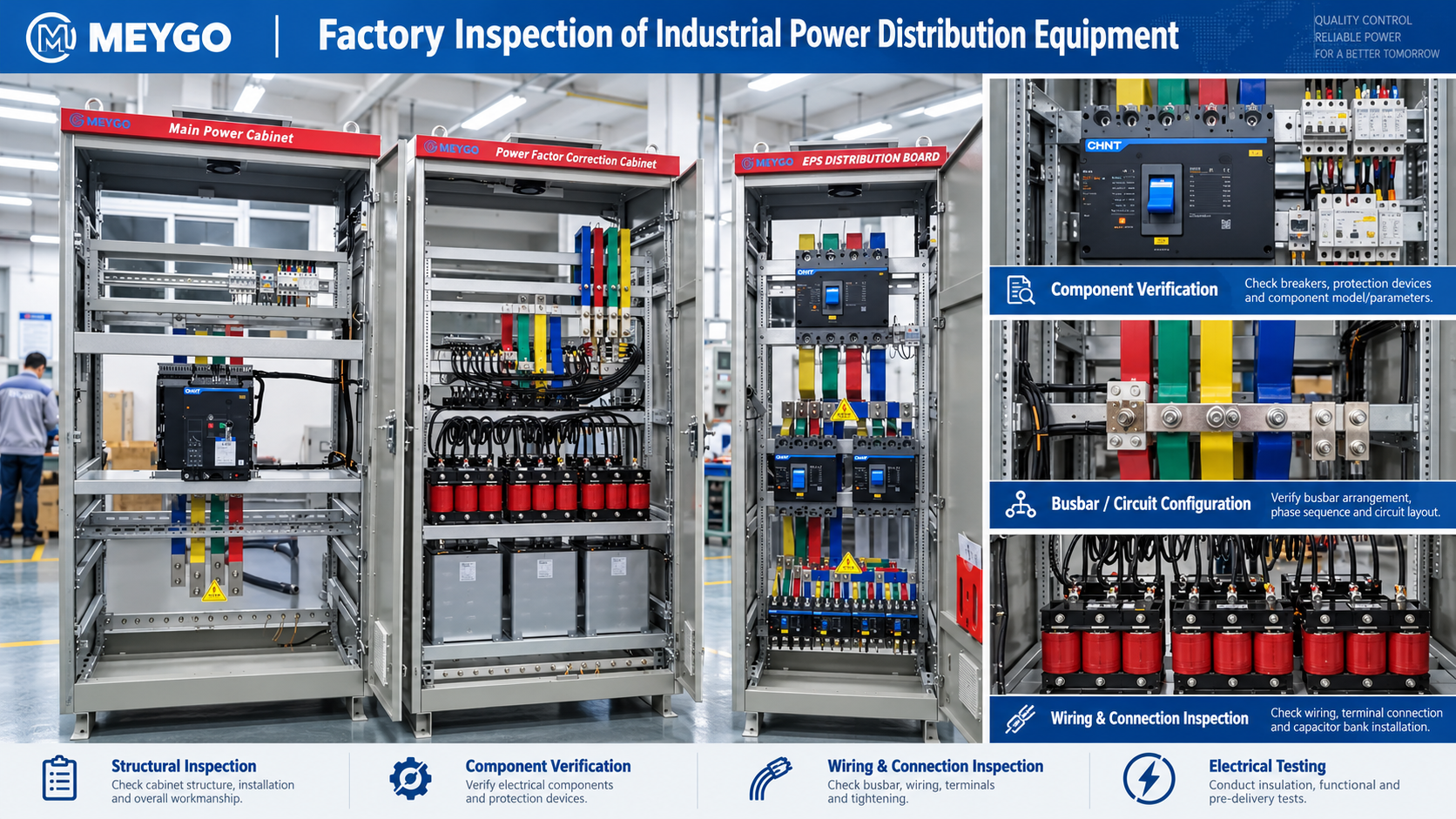
Factory inspection covered the physical condition, assembly completeness, and applicable electrical characteristics of the finished distribution equipment.
The inspection process addressed several key areas:
-
Structural inspection: Checking enclosure condition, assembled parts, and the mechanical operation of accessible components.
-
Component verification: Confirming that the installed electrical devices corresponded to the specified equipment configuration.
-
Wiring and connection inspection: Reviewing circuit connections, terminal identification, and wiring consistency.
-
Electrical testing: Performing the applicable electrical checks required for the supplied equipment.
These activities were intended to identify manufacturing or assembly deviations before the equipment left the factory.
For applicable low-voltage assemblies, IEC 61439-1 provides general requirements for construction, technical characteristics, and verification. The actual factory inspection scope was determined by the equipment configuration and project requirements.
-
Protection and Circuit Configuration Verification
For a heavy-duty industrial distribution project, factory verification must also address the relationship between the completed assemblies and the electrical design.
MEYGO checked the implemented circuit arrangements against the project drawings and equipment configuration requirements.
This included reviewing the identification of incoming and outgoing circuits, the installed protective devices, and their relationship to the designated loads.
The protection setting schemes developed during engineering provided technical references for the relevant protection configurations.
Where protection settings were applicable to the supplied devices, their configuration needed to correspond to the established project requirements.
This verification helped identify discrepancies between the intended electrical arrangement and the completed equipment before shipment.
It did not replace the site-specific checks required during installation and commissioning.
-
Electrical Drawings and Technical Documentation
MEYGO provided the technical documentation associated with the supplied distribution system as part of the project handover.
The documentation included electrical system drawings, circuit configuration information, technical manuals, and relevant supporting materials required under the project scope.
These documents served different purposes:
-
Electrical system drawings: Identifying the distribution arrangement and the relationships between electrical circuits.
-
Circuit configuration information: Providing references for equipment connections and the implemented circuit arrangements.
-
Protection setting schemes: Documenting the protection requirements established during engineering.
-
Technical manuals: Supporting equipment identification, installation preparation, and subsequent operation.
The technical handover connected the completed factory equipment with the requirements for site installation and commissioning.
Factory verification and technical documentation completed MEYGO's pre-delivery engineering responsibilities for the Kenya cement plant project.
-
Installation Coordination and Commissioning Support
MEYGO provided technical coordination and commissioning support for the Kenya cement plant power distribution project, helping the site implementation team apply the supplied electrical designs and equipment configurations during installation.
The support focused on clarifying electrical interfaces, addressing technical questions, and assisting with the commissioning requirements of the heavy-duty distribution system.
-
Electrical Installation and Interface Coordination
Installing the supplied distribution assemblies required coordination between the cabinet connections and the plant's electrical infrastructure.
MEYGO provided technical assistance to help the installation team interpret equipment connection requirements and clarify interfaces between incoming supplies, outgoing circuits, and connected production equipment.
This coordination addressed practical installation questions, including circuit identification, connection arrangements, and consistency with the electrical drawings.
Any site-specific differences affecting the intended electrical configuration required technical review before corresponding changes could be implemented.
The objective was to support correct integration of the supplied equipment into the plant's electrical installation.
-
Protection Setting and Commissioning Guidance
Commissioning a heavy-duty distribution system requires attention to the operating requirements of the connected equipment and the protective functions assigned to individual circuits.
MEYGO provided technical guidance based on the protection setting schemes and electrical configurations developed during the engineering stage.
The support addressed the interpretation of specified protection parameters, coordination with the connected equipment, and technical questions arising during commissioning preparation.
Final settings and operational checks needed to be verified against the actual installed equipment and site conditions before the relevant circuits were placed into service.
Through this technical coordination, MEYGO supported the transition from factory-supplied distribution assemblies to their intended application within the cement plant's electrical system.
-
Project Value and Heavy-Duty Distribution Capabilities
The Kenya cement plant project demonstrates MEYGO's capability to deliver an integrated power distribution solution for heavy-duty industrial applications, where electrical system design must address demanding production loads, protection requirements, and challenging operating environments.
By combining project-specific engineering with complete distribution equipment supply, MEYGO delivered a coordinated electrical solution for the plant's crushing, grinding, and material handling operations. The project also strengthened MEYGO's experience in developing power distribution solutions for industrial facilities exposed to high ambient temperatures and significant dust.
For cement plant owners, EPC contractors, and industrial equipment buyers, the project highlights the value of working with a supplier capable of coordinating electrical engineering, customized distribution equipment manufacturing, quality verification, and technical support within a single project scope.
Looking for a Power Distribution Solution for Your Cement Plant?
MEYGO provides industrial electrical distribution design, customized equipment manufacturing, factory testing, and technical support for heavy-duty industrial projects.
Share your electrical load list, single-line diagram, equipment ratings, estimated quantity, and project location. Our engineering team can review the information and discuss a suitable power distribution solution.