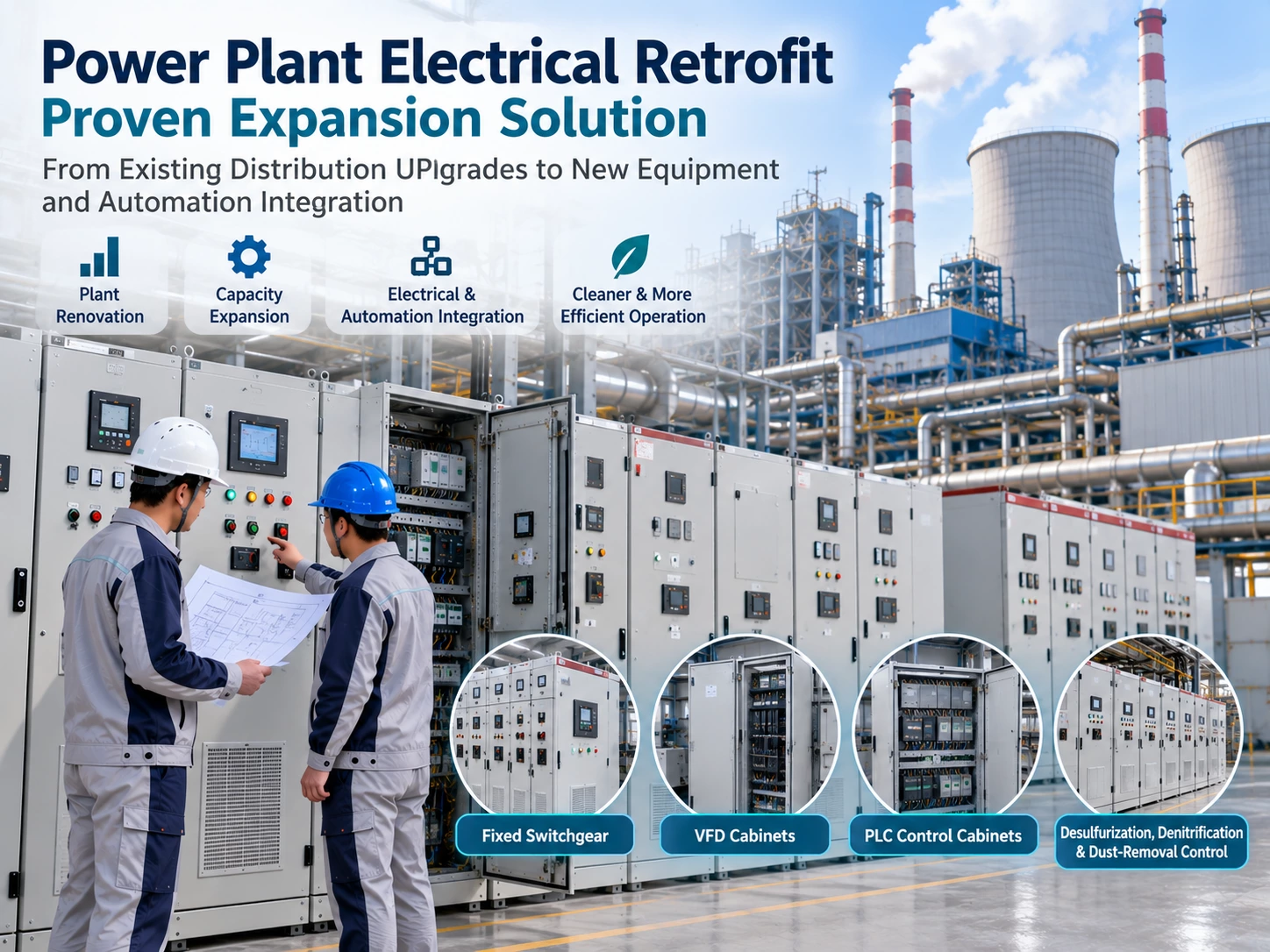
power-plant-electrical-retrofit
From Existing Distribution Upgrades to New Equipment and Automation Integration
Opening Introduction
Power Plant Electrical Retrofit projects rarely begin with a completely new electrical system.
Existing plants already have distribution equipment, production processes, installed loads, and control systems. When capacity is expanded or new equipment is added, the new electrical equipment must work within this existing environment.
This project addresses two typical requirements: existing-plant electrical renovation and expansion with additional equipment.
The solution combines VFD cabinets, fixed switchgear, PLC control cabinets, and automated control cabinets for desulfurization, denitrification, and dust-removal systems. The engineering focus therefore extends beyond cabinet supply to electrical and automation integration within an operating plant.
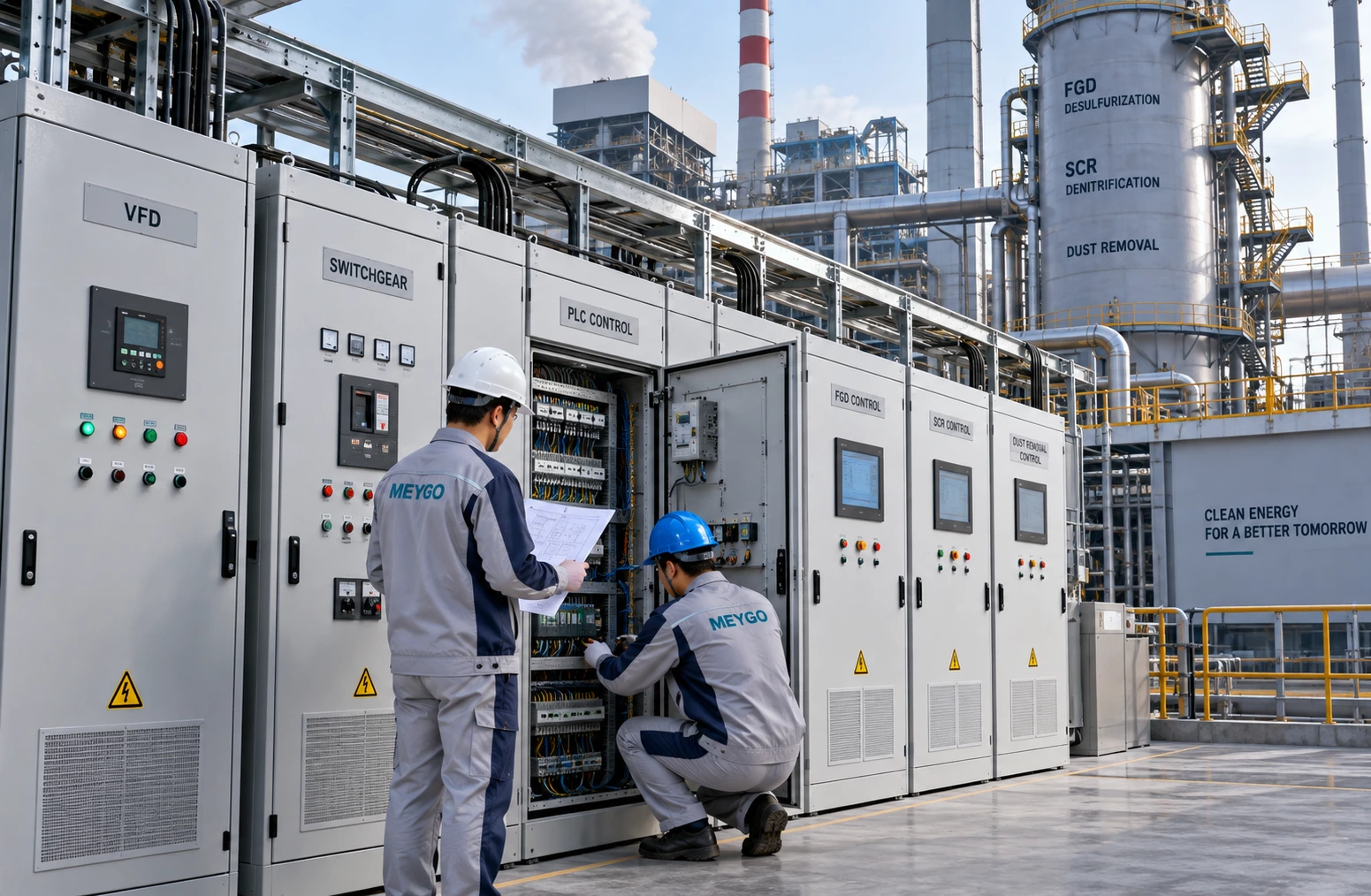
Table of Contents
- Project Overview
- Project Requirements
- Main Challenges in Thermal Power Renovation
- Engineering Solution
- Equipment Configuration
- Implementation Approach
- Project Capability Demonstrated
- Project Value
- Conclusion
1. Project Overview
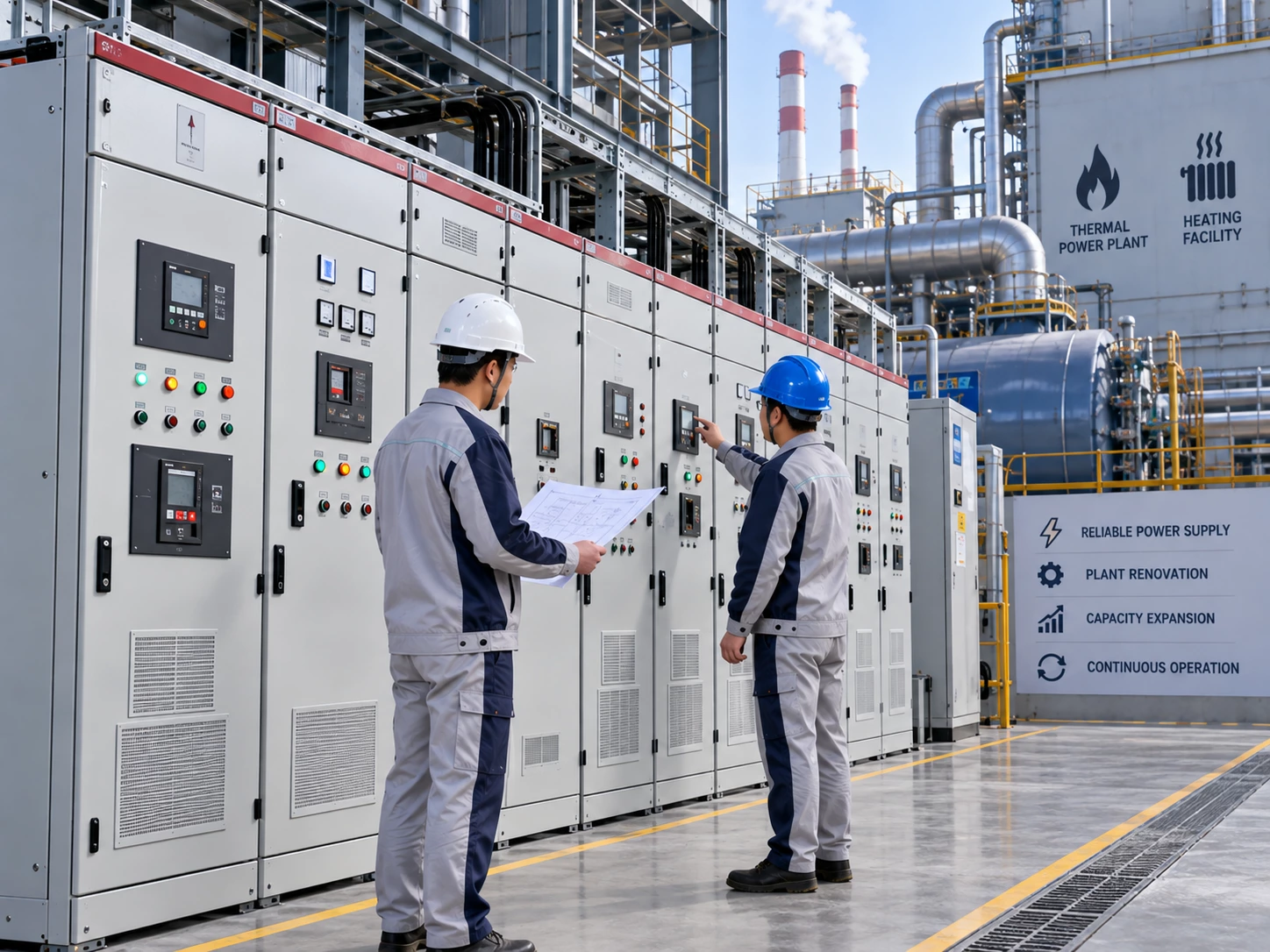
This case covers electrical retrofit and expansion work for thermal power and heating facilities.
Two main project types appear in practice.
The first is existing-plant electrical renovation. The original distribution and control systems require upgrade while the plant continues to operate.
The second is existing-plant expansion. New production or auxiliary equipment is added, creating additional electrical loads that need matching power distribution and control support.
These brownfield conditions differ from greenfield projects. New equipment must interface with systems that are already installed and running.
2.Power Plant Electrical Retrofit Requirements
The core requirement is not simply the purchase of new cabinets.
Clients need solutions that address existing system constraints, support new equipment connection, expand distribution capacity, and integrate control functions. In many cases, environmental process equipment such as desulfurization, denitrification, and dust-removal systems also requires automated control.
The electrical package must therefore serve both power distribution and process automation needs within an operating plant environment.
3. Challenges of Brownfield Electrical Retrofit and Expansion
- Existing Electrical System Compatibility
New switchgear and control cabinets must coordinate with the plant’s existing distribution layout, protection philosophy, and available space.
- New Equipment Integration
Added process equipment creates new loads. These loads require correctly sized and configured power distribution as well as suitable motor and process control.
- Distribution and Control Coordination
Power distribution equipment and automation systems must work together. Isolated supply of switchgear without coordinated control often fails to meet operational needs.
- Retrofit Implementation in an Existing Plant
Work takes place in a live or partially operating facility. Planning must consider interface points, installation sequence, and minimal disruption to ongoing operations. Specific site constraints remain project-dependent.
4. Fixed Switchgear for Distribution System Expansion
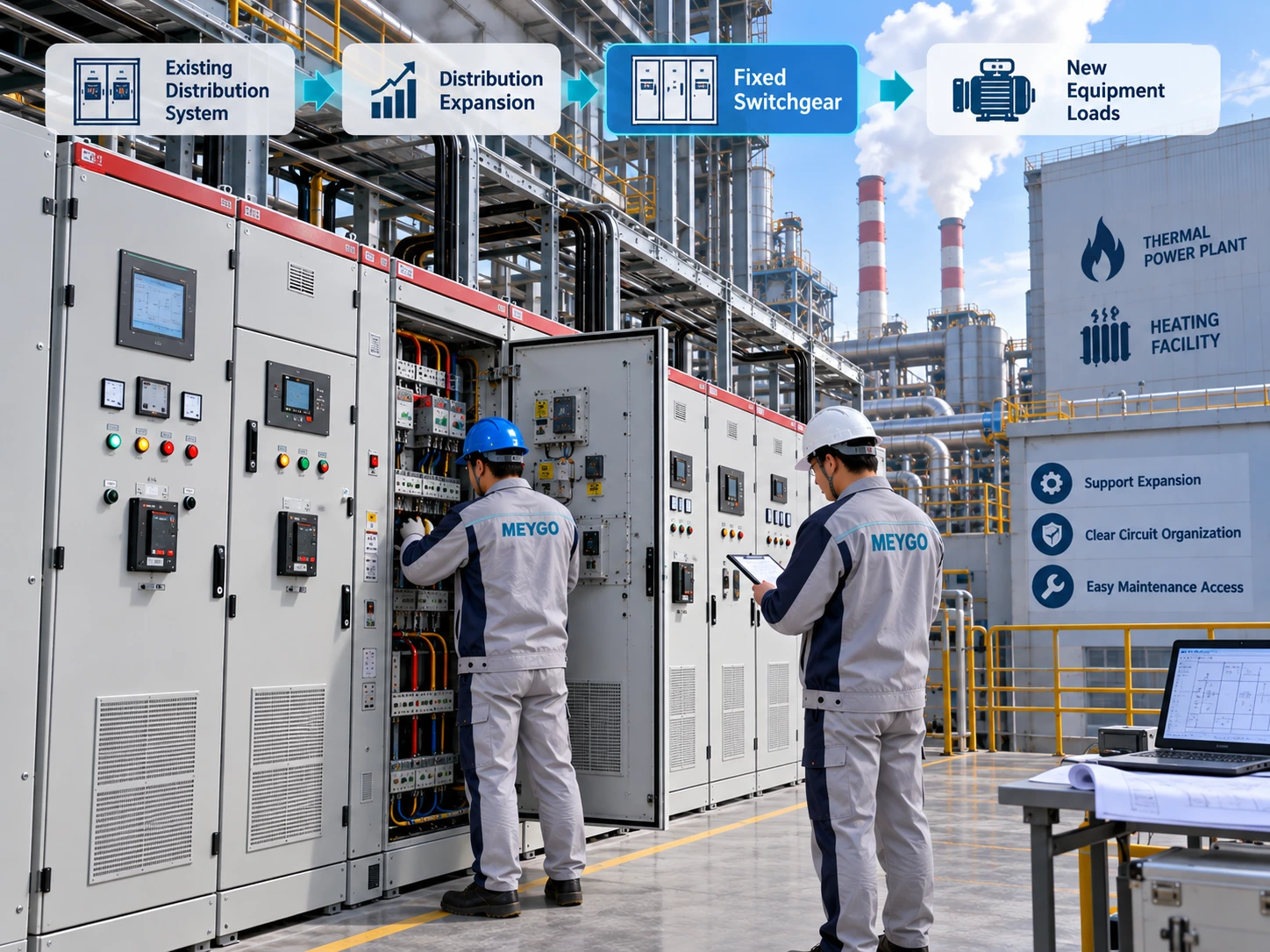
Fixed switchgear supports the expansion of the existing low-voltage distribution system.
In retrofit and expansion projects the typical flow is:
Existing Distribution System → Distribution Expansion → Fixed Switchgear → New Equipment Loads
Fixed switchgear provides a practical platform for adding outgoing circuits that serve newly installed equipment while maintaining clear circuit organization and maintenance access.
5. VFD Cabinets for Motor and Process Control
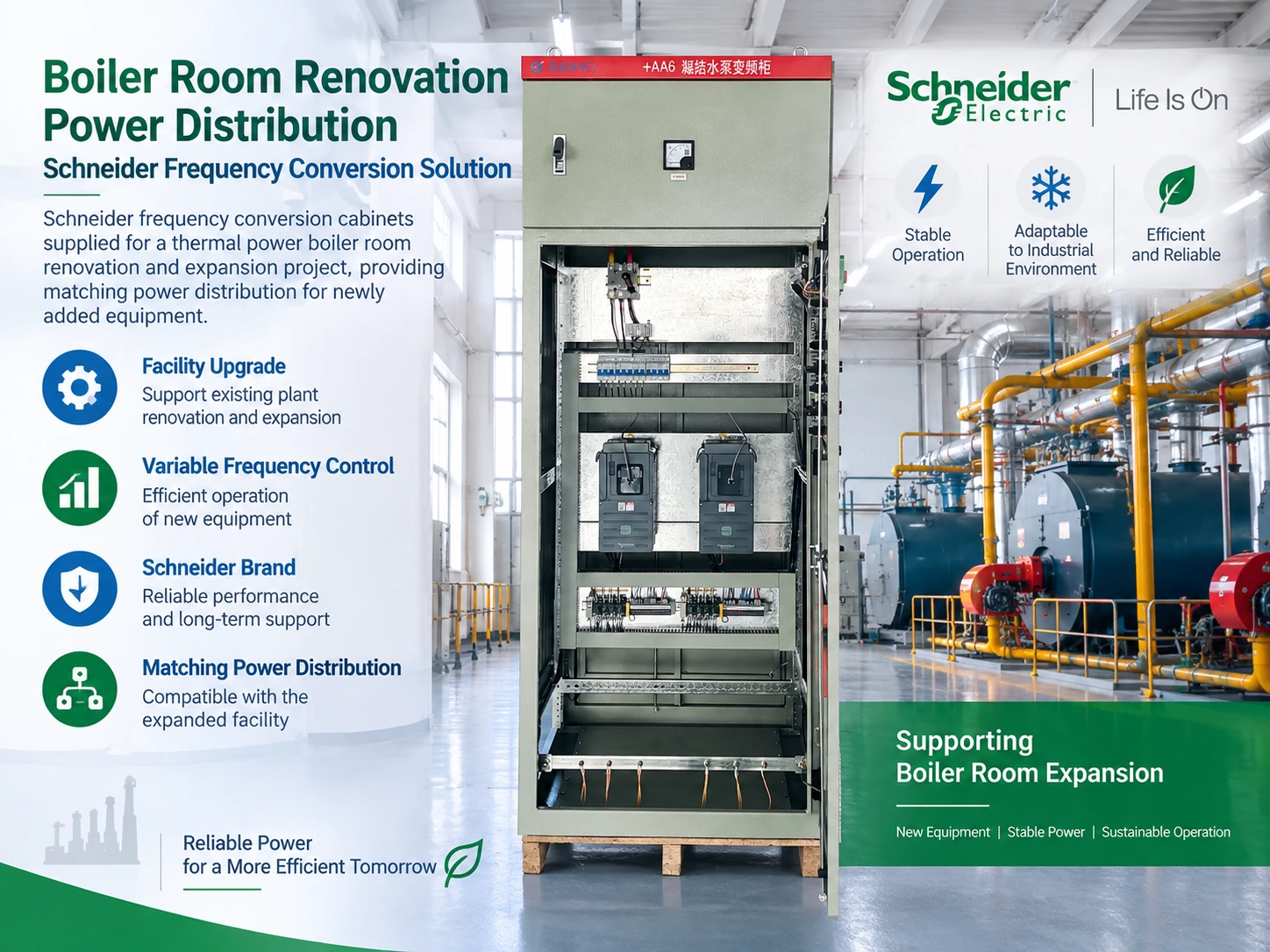
VFD cabinets supply variable-frequency drives for motors associated with new or upgraded process equipment.
When equipment is added during plant expansion, both power supply and motor control must be considered together. Frequency conversion enables more precise speed control and can support efficient operation of pumps, fans, or other driven equipment.
Specific motor ratings, drive parameters, and quantities are project-specific.
6. PLC Control Cabinets for Automation Integration
- PLC-Based Equipment Control
PLC control cabinets provide the logic platform for automated operation of process and auxiliary equipment.
- Electrical and Automation Coordination
Power distribution and control systems must be designed as coordinated elements rather than separate packages.
- Integration With Existing Plant Systems
New PLC cabinets need to interface with the plant’s existing control architecture where required. Communication methods and I/O details depend on the specific site.
7. Desulfurization, Denitrification and Dust Removal Automation
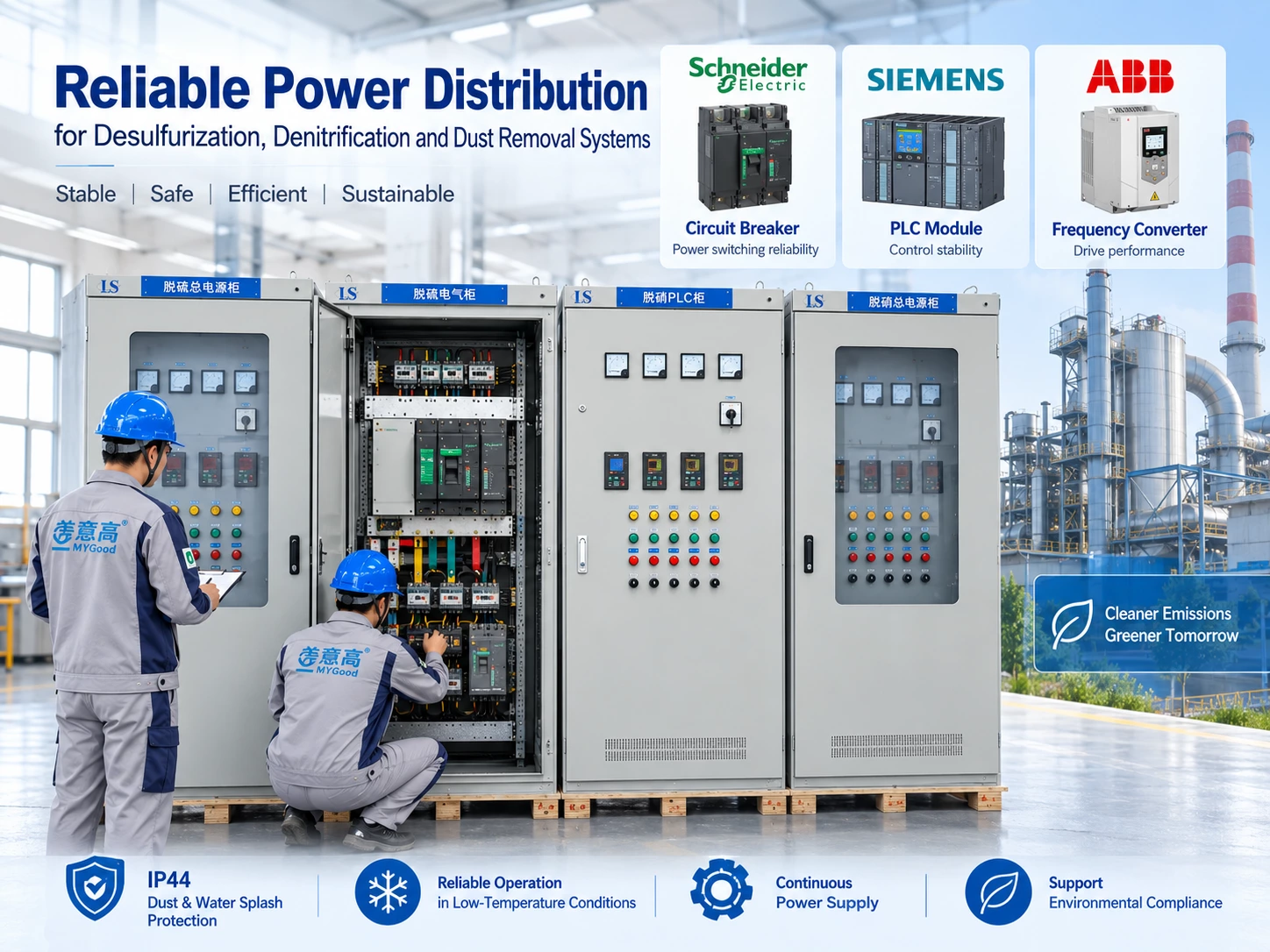
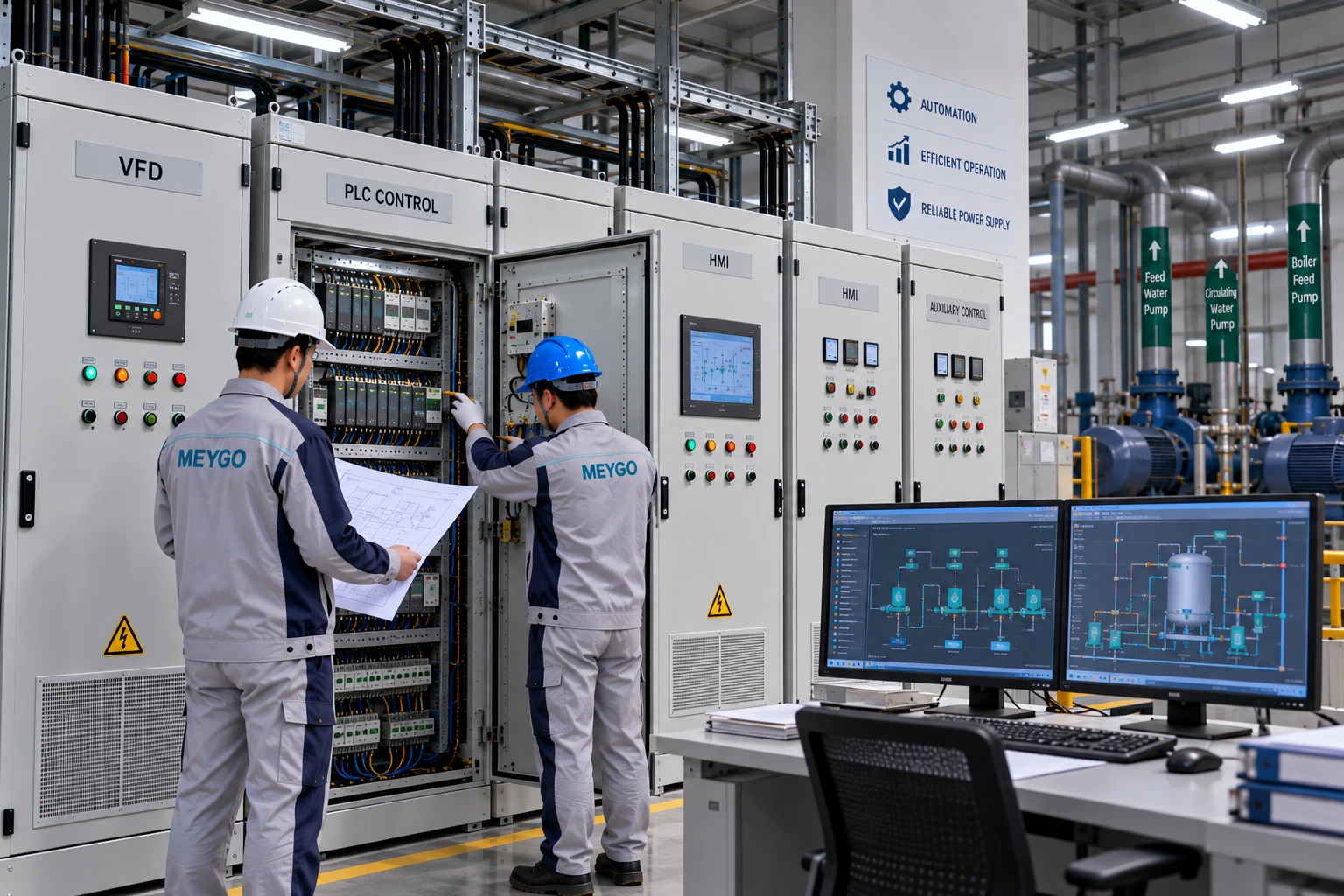
Automated control cabinets support desulfurization, denitrification, and dust-removal process equipment.
These environmental systems are frequently part of thermal power and heating plant upgrades. Dedicated automation control cabinets allow coordinated operation of the related process loads and improve overall system manageability.
This element demonstrates that the project scope extends beyond basic power distribution into process automation support.
8. Two Power Plant Electrical Retrofit Scenarios
Scenario 1 — Existing Plant Retrofit
In pure renovation projects the focus is upgrading or replacing portions of the existing electrical and control systems while the plant remains in service. New cabinets are selected and configured to work with the current installation.
Scenario 2 — Existing Plant Expansion With New Equipment
When new equipment is added, the sequence is:
New Equipment → New Electrical Load → Distribution Expansion → Control Requirements → System Integration
Fixed switchgear expands the distribution capacity. VFD cabinets and PLC control cabinets provide the necessary motor and process control.
9. Integrating Power Distribution and Automation
The complete solution combines four elements:
- Fixed switchgear for distribution expansion
- VFD cabinets for motor and process control
- PLC control cabinets for automation
- Automated control cabinets for desulfurization, denitrification, and dust-removal systems
In thermal power and heating plant retrofit projects, power distribution and automation cannot be treated as fully separate scopes. Coordinated design improves operational consistency and reduces interface problems during installation and commissioning.
10. Project Implementation for Existing Plant Upgrades
Implementation typically follows this sequence:
Existing System Review → Retrofit Requirements Definition → Electrical Design → Cabinet Manufacturing → System Integration
Detailed installation methods, outage windows, and commissioning procedures depend on the specific plant conditions and are defined during project execution. [Data Required]
11. Project Value and Long-Term Operational Benefits
The project demonstrates four practical capabilities:
01 — Existing System Retrofit Capability
Support for upgrades inside operating plants.
02 — Distribution Expansion Capability
Addition of capacity and circuits for newly installed equipment.
03 — Electrical + Automation Integration
Coordinated supply of power distribution and control functions.
04 — Environmental Process Control Integration
Automation support for desulfurization, denitrification, and dust-removal systems.
The work was not limited to switchgear replacement. It delivered an integrated electrical retrofit and automation solution designed around the real constraints of an existing power and heating facility.
12. Conclusion
Power Plant Electrical Retrofit projects require coordinated treatment of existing distribution systems, new equipment loads, control requirements, and automation needs. This case shows how fixed switchgear, VFD cabinets, PLC control, and environmental process automation can be combined to support both renovation and expansion in thermal power and heating plants.